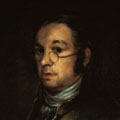
Bernhard Berenson

The Venetian provinces were held together not merely by force of rule. In language and feeling no less than in government, they formed a distinct unit within the Italian peninsula. Painting being so truly a product of the soil as it was in Italy during the Renaissance, the art of the provinces could not help holding the same close relation to the art of Venice that their language and modes of feeling held.

When it once reached the point where its view of the world naturally sought expression in painting, as religious ideas had done before, the Renaissance found in Venice clearer utterance than elsewhere, and it is perhaps this fact which makes the most abiding interest of Venetian painting. It is at this point that we shall take it up.

Paolo was the product of four or five generations of Veronese painters, the first two or three of which had spoken the language of the whole mass of the people in a way that few other artists had ever done. Consequently, in the early Renaissance, there were no painters in the North of Italy, and few even in Florence, who were not touched by the influence of the Veronese. But Paolo's own immediate predecessors were no longer able to speak the language of the whole mass of the people.

—The painters of the end of the fifteenth century who met with the greatest success in solving these problems were Giovanni and Gentile Bellini, Cima da Conegliano, and Carpaccio, and we find each of them enjoyable to the degree that he was in touch with the life of his day. I have already spoken of pageants and of how characteristic they were of the Renaissance, forming as they did a sort of safety-valve for its chief passions. Venice, too, knew the love of glory, and the passion was perhaps only the more intense because it was all dedicated to the State.

Venetian painting would not have been the complete expression of the riper Renaissance if it had entirely neglected the country. City people have a natural love of the country, but when it was a matter of doubt whether a man would ever return if he ventured out of the town-gates, as was the case in the Middle Ages, this love had no chance of showing itself.

—It does not appear that the Hall of Great Council in Venice was turned into a students' academy, and, although the paintings there doubtless gave a decided incentive to artists, their effect upon the public, for whom they were designed, was even greater. The councillors were not allowed to be the only people to enjoy fascinating pictures of gorgeous pageants and ceremonials. The Mutual Aid Societies—the Schools, as they were called—were not long in getting the masters who were employed in the Doge's Palace to execute for their own meeting places pictures equally splendid.

Had Bassano's qualities, however, been of the kind that appealed only to the collectors of his time, he would scarcely rouse the strong interest we take in him. We care for him chiefly because he has so many of the more essential qualities of great art—truth to life, and spontaneity. He has another interest still, in that he began to beat out the path which ended at last in Velasquez. Indeed, one of the attractions of the Venetian school of painting is that, more than all others, it went to form that great Spanish master.

At the beginning of the Renaissance painting was almost wholly confined to the Church. From the Church it extended to the Council Hall, and thence to the Schools. There it rapidly developed into an art which had no higher aim than painting the sumptuous life of the aristocracy. When it had reached this point, there was no reason whatever why it should not begin to grace the dwellings of all well-to-do people.

Bassano appealed to collectors by mere accident. He certainly did not work for them. The painters who came after him and after Tintoretto no longer worked unconsciously, as Veronese did, nor for the whole intelligent class, as Titian and Tintoretto had done, but for people who prided themselves on their connoisseurship.

1401-1428. Pupil of Masolino; influenced by Brunellesco and Donatello.

Syndicate content