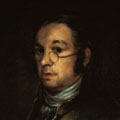
Henry H. Snelling

The several processes enumerated at the head of this chapter, are all discoveries of English philosophers, with the exception of the third and last named. Anthotype was first attempted by M. Ponton a French savan, although it was reserved to Mr. Hunt to bring the process to its present state. The "Crayon Daguerreotype" is an improvement made by J. A Whipple, Esq., of Boston.

 

So called from the circumstance of cyanogen in its combinations with iron performing a leading part in the process. It was discovered by Sir John Herschel. The process is a simple one, and the resulting pictures are blue.

Under this title a process has been brought forward by Mr. Hunt. It consists of the application of a solution of succinic acid to paper, which is subsequently washed over with nitrate of silver. The image is then to be taken either in the camera or otherwise, as required, and is brought out by the application of the sulphate of iron in solution. Although this process has not come into general use, its exact description may be interesting to the general reader, and we therefore subjoin it.

Many efforts have been made to render chromatic acid an active agent in the production of photographs. M. Ponton used a paper saturated with bichromate of potash, and this was one of the earliest photogenic processes. M. Becquerel improved upon this process by sizing the paper with starch previous to the application of the bichromate of potash solution, which enabled him to convert the negative picture into a positive one, by the use of a solution of iodine, which combined with that portion of the starch on which the light had not acted.

The expressed juice, alcoholic, or watery infusion of flowers, or vegetable substances, may be made the media of photogenic action. This fact was first discovered by Sir John Herschel. We have already given a few examples of this in the third chapter.

Syndicate content