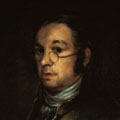
Randall Davies

David Teniers the elder, who was born at Antwerp in 1582, received the first rudiments of his art from Rubens, who soon perceived in him the happy advances towards excelling in his profession that raised him to the head of his school. The prejudice in favour of his son, David Teniers the younger, is so great that the father is generally esteemed but a middling painter; and his pictures not worth the inquiry of a collector.

By the will of God, in the year 1240, we are told by Vasari, Giovanni Cimabue, of the noble family of that name, was born in the city of Florence, to give the first light to the art of painting.

In the preceding chapters we have traced the development of painting for five centuries—from the beginning of the fourteenth, that is to say, to the end of the eighteenth—in Italy, in the Netherlands, in Germany, in Spain, and lastly in France and England. In the nineteenth the story is confined to the last two alone, as with one or two minute exceptions the art of painting had by this time entirely ceased to be worth consideration in any of the others.

While according all due honour, and probably more, to Cimabue as the originator of modern painting, it is to his pupil, Giotto, that we are accustomed to look for the first developments of its possibilities. Had Cimabue's successors been as conservative as his instructors, we might still be not very much better off than if he had never lived.

Meantime we must turn our attention to Holland, where Frans Hals, who was born only three years later than Rubens, namely in 1580, was the forerunner of Rembrandt, Van der Helst, Bol, Lely, and a host more of greater or less painters, who made their country as famous in the seventeenth century for art as their fathers had made it in the sixteenth for arms.

The man who began all this street fighting was a Frenchman—Eugène Delacroix. While still a youth he was bullied, and the bully was such a redoubtable giant that it took somebody with the grit and genius of Delacroix to tackle him, but tackle him he did. The story of the fight, which is a long and glorious one, is so admirably told in Madame Bussy's life of Delacroix, that I have obtained permission to give the essence of it in her own words.

Coming to the second period in the development of the new art—roughly, that is to say, from 1400 to 1450—Vasari observes that even where there is no great facility displayed, yet the works evince great care and thought; the manner is more free and graceful, the colouring more varied and pleasing; more figures are employed in the compositions, and the drawing is more correct inasmuch as it is closer to nature.

Syndicate content