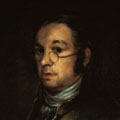
Engraving

The temple of Luxor is about one and a fourth mile above that of Carnac, and though it is of smaller dimensions it is in a superior style of architecture, and in more complete preservation. The entrance is thought to surpass everything else that Egypt presents. In front are the two finest obelisks in the world, formed of rose-colored granite, and rising, as Denon supposes, after allowing for the portion buried in the ground, to the height of one hundred feet. But the objects which most attract attention, are the sculptures which cover the east wing of the northern front.

The small picture which once adorned the tabernacle of the Capuchin high altar at Seville, is interesting on account of its legend, as well as its extraordinary artistic merits. Murillo, whilst employed at the convent, had formed a friendship with a lay brother, the cook of the fraternity, who attended to his wants and waited on him with peculiar assiduity. At the conclusion of his labors, this Capuchin of the kitchen begged for some trifling memorial of his pencil. The painter was quite willing to comply, but said that he had exhausted his stock of canvas.

The tubes forming the viaducts, rest upon two abutments and three piers, called respectively the Anglesea abutment and pier, the Carnarvon abutment and pier, and the Britannia or central pier, built upon the Britannia rock in the middle of the straits, which gives name to the bridge. The Anglesea abutment is 143 feet 6 inches high, 55 feet wide, and 175 feet long to the end of the wings, which terminate in pedestals, supporting colossal lions on either side, 25 feet 6 inches in length, 12 feet 6 inches high, and 8 feet broad, carved out of a single block of Anglesea marble.

Pacheco relates a remarkable effect produced by a picture from the pencil of Methodius, who resided at Constantinople about 854. He was invited to Nicopolis by Bogoris, king of the Bulgarians, to decorate a banqueting-hall in his palace. That prince left the choice of his subject to the artist, limiting him to those of a tragic or terrible character.

"I will not omit to mention," says Vasari, "that the most learned and very reverend Don Vincenzio Borghini, of whom we have before spoken in relation to other matters, has collected into a large book, innumerable drawings of distinguished painters and sculptors, ancient as well as modern, and among these are two drawings on two leaves opposite to each other, one of which is by Donato, and the other by Michael Angelo Buonarroti.

After having executed many capital pictures for the States of Holland, Van de Velde was invited to England by Charles II., who had become acquainted with his talents during his residence in Holland. He arrived in London about 1675, well advanced in years, and the king settled upon him a pension of £100 per annum until his death, in 1693, as appears from this inscription on his tomb-stone in St. James' church: "Mr. William van de Velde, senior, late painter of sea-fights to their Majesties, King Charles II.

The genius of Poussin seems to have gained vigor with age. Nearly his last works, which were begun in 1660, and sent to Paris 1664, were the four pictures, allegorical of the seasons, which he painted for the Duc de Richelieu. He chose the terrestrial paradise, in all the freshness of creation, to designate spring. The beautiful story of Boaz and Ruth formed the subject of summer. Autumn was aptly pictured, in the two Israelites bearing the bunch of grapes from the Promised Land. But the masterpiece was Winter, represented in the Deluge.

"The oldest oil painting now in existence, is believed to be one of the Madonna and infant Jesus in her arms, with an Eastern style of countenance. It is marked DCCCLXXXVI. (886). This singular and valuable painting formed part of the treasures of art in the old palace of the Florentine Republic, and was purchased by the Director Bencivenni from a broker in the street, for a few livres."

There were many colossal statues of Memnon in Egypt, but the most remarkable were the two in the Memnonium or palace of Memnon, at Thebes. The largest is of rose-colored granite, and stood in the centre of the principal court; its height was sixty-four feet, and its remains are scattered forty feet around it.

One of Murillo's pictures, in the possession of a society of friars in Flanders, was bought by an Englishman for a considerable sum, and the purchaser affixed his signature and seal to the back of the canvas, at the desire of the venders. In due time it followed him to England, and became the pride of his collection.

Syndicate content