Estelle M. Hurll

The art of Correggio was very justly summed up by his first biographer, Vasari.

The first biographer of Correggio was Vasari, in whose "Lives of the Painters, Sculptors, and Architects" is included a brief account of this painter. The student should read this work in the last edition annotated by E. H. and E. W. Blashfield and A. A. Hopkins. Passing over the studies of the intervening critics, Julius Meyer's biography may be mentioned next, as an authoritative work, practically alone in the field for some twenty-five years. This was translated from the German by M. C. Heaton, and published in London in 1876.

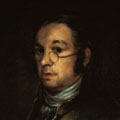
Portrait frontispiece. From a photograph of an alleged portrait of Correggio in the Parma Gallery.

1. The Holy Night.(La Notte.) (Detail.) Painted at the order of Alberto Pratoneri for the altar of his chapel in the church of S. Prospero, Reggio. Agreement signed October 10, 1522. Stolen from the church May, 1640, and taken to Modena. Now in the Dresden Gallery. Size of whole picture: 8 ft. 5 in. by 6 ft. 2 in.

In the time of Correggio the convent of S. Paolo (St. Paul) in Parma was in charge of the abbess Giovanna da Piacenza, who had succeeded an aunt in this office in 1507. She was a woman of liberal opinions, who did not let the duties of her position entirely absorb her. She still retained some social connections and was a patroness of art and culture. The daughter of a nobleman, she was a person of consequence, whose private apartments were such as a princess might have. Already a well known painter of the day had decorated one of her rooms when she heard of the rising artist Correggio.

The story which the picture of the Presentation illustrates is a story of the infancy of Jesus Christ. According to the custom of the Jews at that time, every male child was "presented," or dedicated, to the Lord when about a month old. Jesus was born in Bethlehem of Judæa, a small town about four miles from the city of Jerusalem, the Jewish capital, where the temple was. When he was about a month old, his mother Mary and her husband Joseph, who were devout Jews, brought him to the great city for the ceremony of the presentation in the temple.

We read in the evangelists' record of the life of Jesus that he went about the country preaching the gospel (or the good news) of the kingdom of Heaven. Sometimes he preached in the synagogue on the Sabbath day; but more often he talked to the people in the open air, sometimes on the mountain-side, sometimes on the shore of the lake Gennesaret, or again in the streets of their towns.

The picture of Christ at Emmaus illustrates an event in the narrative of Christ's life which took place on the evening of the first Easter Sunday. It was now three days since the Crucifixion of Christ just outside Jerusalem, and the terrible scene was still very fresh in the minds of his disciples. It happened that late in the day two of them were going to a village called Emmaus, not very far from Jerusalem.

We should have but a very imperfect idea of Rembrandt's work if we did not learn something about the portraits he painted. It was for these that he was most esteemed in his own day, being the fashionable portrait painter of Amsterdam at a time when every person of means wished to have his likeness painted. A collection of his works of this kind would almost bring back again the citizens of Amsterdam in the seventeenth century, so life-like are these wonderful canvases.

The patriotism of the Dutch is seen through the entire history of "brave little Holland." Early in the sixteenth century every town of considerable size had a military company composed of the most prominent citizens. Each company, or guild, had a place of assembly, or doelen, and a drilling-ground. The officers were chosen for a year, and the highest appointments were those of captain, lieutenant, and ensign. Upon these civic guards rested the responsibility of maintaining the order and safety of the town.

When the painter Rembrandt came to Amsterdam in 1631, a young man seeking his fortune in the great city, a lad of twelve years was living in his father's country seat, near by, who was later to become one of his warm friends. This was Jan Six, the subject of the portrait etching reproduced here. There was a great contrast in the circumstances of life in which the two friends grew up. Rembrandt was the son of a miller, and had his own way to make in the world. Jan Six was surrounded from his earliest years with everything which tended to the gratification of his natural taste for culture.

Syndicate content