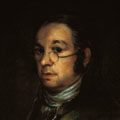
Estelle M. Hurll

Flemish:—

  • Franz Snyders, 1579-1657.
  • Peter Paul Rubens, 1577-1640.
  • Gaspard de Craeyer, 1582-1669.
  • Jacob Jordaens, 1594-1678.
  • Justus Sustermans, 1597-1681.
  • David Teniers, 1610-1690.

Spanish:—

  • Pacheco, 1571-1654.
  • Herrera, 1576-1656.
  • Zurbaran, 1598-1662.
  • Velasquez, 1599-1660.
  • Cano, 1601-1676.
  • Murillo, 1618-1682.

French:—

In the distant past which we call the age of fable lived the cunning craftsman Dædalus of Athens. One of his most curious inventions was a labyrinth which he constructed for Minos, the king of Crete. Having at length displeased this king he resolved to flee from the island with his son Icarus. It was impossible to escape by way of the sea without detection, but Dædalus was not discouraged.

Writers:—

  • Ben Jonson, 1573 or 1574-1637.
  • Robert Herrick, 1591-1674.
  • George Herbert, 1593-1632.
  • Edmund Waller, 1605 or 1606-1687.
  • Sir William Killigrew, 1605-1693.
  • Sir John Suckling, 1608 or 1609-1641 or 1642.
  • John Milton, 1608-1674.
  • Thomas Killigrew, 1611-1682.
  • John Evelyn, 1620-1706 (author of "Memoirs").

Architect:—

  • Inigo Jones, 1572-1653.

Royalists:—

In connection with St. Catherine:—

Latin Hymn, Vox Sonora Nostri Chori, St. Catherine's Day. Translated by David Morgan.

Mrs. Jameson. Sacred and Legendary Art.

S. Baring-Gould. Lives of the Saints. Volume for November.

In connection with St. Cecilia:—

S. Baring-Gould. Lives of the Saints. Volume for November.

Mrs. Jameson. Sacred and Legendary Art.

Chaucer. Second Nonnes Tale.

The Sacrifice at Lystra was another of the great tapestries, and was in the second series of five which had to do with the life of St. Paul as recorded in the Acts of the Apostles. The apostle was on a journey with his companion Barnabas, and they were teaching and healing as they went. At Lystra they had performed a wonderful cure in healing a man who had been a cripple from his birth.

1483. Raphael born at Urbino.

1499. Raphael enters Perugino's studio at Perugia.

1504. "The Marriage of the Virgin."

1504. Raphael's first visit to Florence.

1505. Raphael in Perugia:—

The Madonna of St. Anthony.

The fresco of San Severo.

1506. Visit at Urbino:—

Raphael's portrait by himself.

1504-1508. The Florentine Period:—

Granduca Madonna.

Tempi Madonna.

Madonna in the Meadow.

In the Vatican palace there is one chamber in a series of chambers decorated with Raphael's paintings which is called in Italian Stanza d'Eliodoro, or the Heliodorus Room. The name is taken from the first of the paintings which cover the walls of the room.

The story which Raphael told in this picture is taken from an incident in the history of Jerusalem, which is related in one of the books of the Apocrypha and in Josephus's History.

On the wall below the design of Jacob's Dream, in the ceiling of this same Heliodorus Room, is the Liberation of Peter, painted above and on each side of a window. The story is taken from the Acts of the Apostles, Herod the king, as the narrative says, "stretched forth his hands to vex certain of the church. And he killed James the brother of John with the sword. And because he saw it pleased the Jews, he proceeded further to take Peter also." The story of the imprisonment and liberation of Peter now follows:—

Rulers:—

Lorenzo de' Medici (reigned 1469-1492) and Pietro de' Medici (1492-1494), dukes of Florence.

Giovanni Galeazzo Sforza (reigned 1476-1494), Lodovico Maria Sforza (1494-1500), and Massimiliano Sforza (1512-1515), dukes of Milan.

Francesco Maria della Rovere, duke of Urbino (born 1490; died 1535).

Ferdinand I. (reigned 1458-1494), Ferdinand II. (reigned 1495-1496), and Ferdinand III., kings of Naples, the last being he who was also king of Spain as Ferdinand V.

Syndicate content