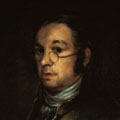
S. Spooner

Her name having become famous in Italy, in 1559, the King of Spain ordered the Duke of Alba, who was then at Rome, to invite her to the court of Madrid. She arrived there in the same year, and was received with great distinction, and lodged in the palace. Her first work was the portrait of the king, who was so much pleased with the performance that he rewarded her with a diamond worth 1500 ducats, and settled upon her a pension of 200 ducats.

Like his father, the younger Van de Velde designed everything from nature, and his compositions are distinguished by a more elegant and tasteful arrangement of his objects, than is to be found in the productions of any other painter of marines.

"Painting is an imitation by means of lines and colors, on some superfices, of everything that can be seen under the sun; its end is to please.

Principles that every man capable of reasoning may learn:—There can be nothing represented,

  • Without light,
  • Without form,
  • Without color,
  • Without distance,
  • Without an instrument, or medium.

Things which are not to be learned, and which make an essential part of painting.

A person of rank who dabbled in painting for his amusement, having one day shown Poussin one of his performances, and asked his opinion of its merits, the latter replied, "You only want a little poverty, sir, to make a good painter."

This extraordinary painter was born at Haerlem, in 1608. His parents were extremely poor, and his mother sold to the peasants bonnets and handkerchiefs, which the young Adrian painted with flowers and birds. These attempts were noticed by Francis Hals, a distinguished painter of Haerlem, who offered to take the young artist into his school—which proposal was gladly accepted. Hals, on discovering his superior genius, separated him from all his companions, and locked him up in a garret, that he might profit by his talents.

The very situation of this famous ancient city of Egypt had long been a subject of learned dispute, till it was accurately ascertained by the French expedition to Egypt. Numerous heaps of rubbish, of blocks of granite covered with hieroglyphics and sculptures, of colossal fragments, scattered over a space three or four leagues in circumference, marks its site, a few miles south of Metarea or Heliopolis, at a village called Moniet-Rahinet. According to Herodotus, the foundation of Memphis was ascribed to Menes, the first king of Egypt.

Francisco Vieira, an eminent Portuguese painter, was still a child when he became enamored of Doña Ignez Elena de Lima, the daughter of noble parents, who lived on friendly terms with his own and permitted the intercourse of their children. The thread of their loves was broken for a while by the departure of the young wooer to Rome, in the suite of the Marquis of Abrantes. There he applied himself diligently to the study of painting, under Trevisani, and carried off the first prize in the Academy of St. Luke.

The tubes of the Britannia bridge were raised by means of three hydraulic presses of the most prodigious size, strength, weight, and power; two of which were placed in the Britannia pier, above the points where the tubes rest, and the other alternately on the Anglesea and Carnarvon piers.

This Spanish painter was a favorite with King Charles II. He was painting his Majesty's portrait one day in the presence of the Queen mother, when the royal sitter asked him to which of the knightly orders he belonged. "To none," replied the artist, "but the order of your Majesty's servants." "Why is this?" said Charles. The Admiral of Castile, who was standing by, replied that he should have a cross immediately; and on leaving the royal presence, he sent Carreño a rich badge of Santiago, assuring him that what the king had said entitled him to wear it.

Her royal patrons at last married their fair artist, now arrived to a mature age, to Don Fabrizio de Moncada, a noble Sicilian, giving her a dowry of 12,000 ducats and a pension of 1,000, besides many rich presents in tapestries and jewels. The newly wedded pair retired to Palermo, where the husband died some years after. Sofonisba was then invited back to the court of Madrid, but excused herself on account of her desire to see Cremona and her kindred once more.

Syndicate content