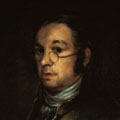
S. Spooner

The very situation of this famous ancient city of Egypt had long been a subject of learned dispute, till it was accurately ascertained by the French expedition to Egypt. Numerous heaps of rubbish, of blocks of granite covered with hieroglyphics and sculptures, of colossal fragments, scattered over a space three or four leagues in circumference, marks its site, a few miles south of Metarea or Heliopolis, at a village called Moniet-Rahinet. According to Herodotus, the foundation of Memphis was ascribed to Menes, the first king of Egypt.

Francisco Vieira, an eminent Portuguese painter, was still a child when he became enamored of Doña Ignez Elena de Lima, the daughter of noble parents, who lived on friendly terms with his own and permitted the intercourse of their children. The thread of their loves was broken for a while by the departure of the young wooer to Rome, in the suite of the Marquis of Abrantes. There he applied himself diligently to the study of painting, under Trevisani, and carried off the first prize in the Academy of St. Luke.

The tubes of the Britannia bridge were raised by means of three hydraulic presses of the most prodigious size, strength, weight, and power; two of which were placed in the Britannia pier, above the points where the tubes rest, and the other alternately on the Anglesea and Carnarvon piers.

This Spanish painter was a favorite with King Charles II. He was painting his Majesty's portrait one day in the presence of the Queen mother, when the royal sitter asked him to which of the knightly orders he belonged. "To none," replied the artist, "but the order of your Majesty's servants." "Why is this?" said Charles. The Admiral of Castile, who was standing by, replied that he should have a cross immediately; and on leaving the royal presence, he sent Carreño a rich badge of Santiago, assuring him that what the king had said entitled him to wear it.

Her royal patrons at last married their fair artist, now arrived to a mature age, to Don Fabrizio de Moncada, a noble Sicilian, giving her a dowry of 12,000 ducats and a pension of 1,000, besides many rich presents in tapestries and jewels. The newly wedded pair retired to Palermo, where the husband died some years after. Sofonisba was then invited back to the court of Madrid, but excused herself on account of her desire to see Cremona and her kindred once more.

This distinguished French painter was born at Andely, in Normandy, in 1594. He was descended from a noble family, originally of Soissons, whose fortunes had been ruined in the disastrous civil wars in the time of Charles IX. and Henry III. His father, Jean Poussin, after serving in the army of Henry IV., settled on a small paternal inheritance at Andely, where he cultivated a taste for literature and the sciences, and instructed his son in the same.

The admirers of Mengs, jealous of Poussin's title of "the Painter of Philosophers," conferred on him the antithetical one of "the Philosopher of Painters." Though it cannot be denied that Mengs' writings and his pictures are learned, yet few artists have encountered such a storm of criticism.

When the States-General were at war with Spain, Brower started on a visit to Antwerp, whither his reputation had already proceeded him. Omitting to provide himself with a passport, he was arrested as a spy, and confined in the citadel, where the Duke d'Aremberg was imprisoned.

This famous lake, according to Herodotus, with whose account Diodorus Siculus and Mela agree, was entirely an artificial excavation, made by king Moeris, to carry off the overflowing waters of the Nile, and reserve them for the purposes of irrigation. It was, in the time of Herodotus, 3,600 stadia or 450 miles in circumference, and 300 feet deep, with innumerable canals and reservoirs. Denon, Belzoni, and other modern travelers, describe it at the present time as a natural basin, thirty or forty miles long, and six broad.

Estéban March, a distinguished Spanish painter of the 17th century, was eccentric in character and violent in temperament. Battles being his favorite subjects, his studio was hung round with pikes, cutlasses, javelins, and other implements of war, which he used in a very peculiar and boisterous manner.

Syndicate content