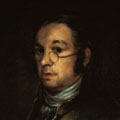
S. Spooner

There is an old painting in the church of the Holy Virgin at Florence, representing the Virgin with the infant Jesus in her arms, trampling the dragon under her feet, about which is the following curious legend, thus humorously described by Southey, in the Annals of the Fine Arts:

The pictures of Jan Steen usually represent merry-makings, and the frolics and festivities of the ale-house, which he treated with a characteristic expression of humorous drollery, that compensated for the vulgarity of his subjects. He sometimes painted interiors, domestic assemblies, conversations, mountebanks, etc., which he generally accompanied with some facetious trait of wit or humor, admirably rendered. Some of his works of this description are little inferior to the charming productions of Gabriel Metzu.

Mario Ballassi, a Florentine painter born in 1604, studied successively under Ligozzi, Roselli, and Passignano; he assisted the latter in the works he executed at Rome for Pope Urban XIII. His chief talent lay in copying the works of the great masters, which he did to admiration. Don Taddeo Barberini employed him to copy the Transfiguration of Raffaelle, for the Church of the Conception, in which he imitated the touch and expression of the original in so excellent a manner as to excite the surprise of the best judges at Rome.

In Scott's Paris Revisited (A. D. 1815), we have the following interesting particulars of the removal of the celebrated pictures and statues from this famous emporium of the fine arts.

Don José de Valdivielso, one of the chaplains of the gay Cardinal Infant Ferdinand of Austria, relates the following legend in his paper on the Tax on Pictures, appended to Carducho's Dialogos de la Pintura. A certain young friar was famous amongst his order, for his skill in painting; and he took peculiar delight in drawing the Virgin and the Devil. To heighten the divine beauty of the one, and to devise new and extravagant forms of ugliness for the other, were the chief recreations for his leisure hours.

Dr Kügler, a judicious critic, thus sums up his character as an artist: "The works of Jan Steen imply a free and cheerful view of common life, and he treats it with a careless humor, such as seems to deal with all its daily occurrences, high and low, as a laughable masquerade and a mere scene of perverse absurdity. His treatment of the subjects differed essentially from that adopted by other artists.

This eminent sculptor and famous medalist was in high favor with Clement VII., who took him into his service. During the time of the Spanish invasion, Cellini asked the Pope for absolution for certain homicides which "he believed himself to have committed in the service of the church." The Pope absolved him, and, to save time, he added an absolution in prospectu, "for all the homicides thereafter which the said Benvenuto might commit in the same service." On another occasion, Cellini got into a broil, and committed a homicide that was not in the service of the church.

Estéban March, a distinguished Spanish painter of the 17th century, was eccentric in character and violent in temperament. Battles being his favorite subjects, his studio was hung round with pikes, cutlasses, javelins, and other implements of war, which he used in a very peculiar and boisterous manner.

Ancient Rome was built upon seven hills, which are now scarcely discoverable on account of the vast quantities of rubbish with which the valleys are filled. Pliny estimates the circumference of the city in his time at 13,000 paces (which nearly agrees with modern measurements), and the population at 3,000,000. Rome was filled with magnificent public edifices, temples, theatres, amphitheatres, circuses, naumachiæ, porticos, basilicæ, baths, gardens, triumphal arches, columns, sewers, aqueducts, sepulchres, public and private palaces, etc.

Palomino was one day in company with Carreño at the house of Don Pedro de Arce, when a discussion arose about the merits of a certain copy of Titian's St. Margaret, which hung in the room After all present had voted it execrable, Carreño quietly remarked, "It at least has the merit of showing that no man need despair of improving in art, for I painted it myself when I was a beginner."

Syndicate content