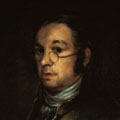
Engraving

Francisco Vieira, an eminent Portuguese painter, was still a child when he became enamored of Doña Ignez Elena de Lima, the daughter of noble parents, who lived on friendly terms with his own and permitted the intercourse of their children. The thread of their loves was broken for a while by the departure of the young wooer to Rome, in the suite of the Marquis of Abrantes. There he applied himself diligently to the study of painting, under Trevisani, and carried off the first prize in the Academy of St. Luke.

The tubes of the Britannia bridge were raised by means of three hydraulic presses of the most prodigious size, strength, weight, and power; two of which were placed in the Britannia pier, above the points where the tubes rest, and the other alternately on the Anglesea and Carnarvon piers.

Palomino was one day in company with Carreño at the house of Don Pedro de Arce, when a discussion arose about the merits of a certain copy of Titian's St. Margaret, which hung in the room After all present had voted it execrable, Carreño quietly remarked, "It at least has the merit of showing that no man need despair of improving in art, for I painted it myself when I was a beginner."

After her second marriage, Sofonisba continued to pursue the art at Genoa, where her house became the resort of all the polished and intellectual society of the Republic. The Empress of Germany paid her a visit on her way to Spain, and accepted a little picture,—one of the most finished and beautiful of her works. She was also visited by her former charge, the Infanta, then the wife of the Archduke Albert, and with him co-sovereign of Flanders.

In 1612, at the age of eighteen, Poussin went to Paris in search of improvement, where he devoted himself to studying the best works to which he could gain access (for the fine arts were then at a low ebb in France) with the greatest assiduity. In 1620, according to Felibien, the Jesuits celebrated the canonization of the founder of their order, Ignatius Loyola and St. Francis Xavier, on which occasion they determined to display a series of pictures by the first artists in Paris, representing the miracles performed by their patron saints.

The admirers of Mengs, jealous of Poussin's title of "the Painter of Philosophers," conferred on him the antithetical one of "the Philosopher of Painters." Though it cannot be denied that Mengs' writings and his pictures are learned, yet few artists have encountered such a storm of criticism.

When the States-General were at war with Spain, Brower started on a visit to Antwerp, whither his reputation had already proceeded him. Omitting to provide himself with a passport, he was arrested as a spy, and confined in the citadel, where the Duke d'Aremberg was imprisoned.

This famous lake, according to Herodotus, with whose account Diodorus Siculus and Mela agree, was entirely an artificial excavation, made by king Moeris, to carry off the overflowing waters of the Nile, and reserve them for the purposes of irrigation. It was, in the time of Herodotus, 3,600 stadia or 450 miles in circumference, and 300 feet deep, with innumerable canals and reservoirs. Denon, Belzoni, and other modern travelers, describe it at the present time as a natural basin, thirty or forty miles long, and six broad.

Estéban March, a distinguished Spanish painter of the 17th century, was eccentric in character and violent in temperament. Battles being his favorite subjects, his studio was hung round with pikes, cutlasses, javelins, and other implements of war, which he used in a very peculiar and boisterous manner.

Ancient Rome was built upon seven hills, which are now scarcely discoverable on account of the vast quantities of rubbish with which the valleys are filled. Pliny estimates the circumference of the city in his time at 13,000 paces (which nearly agrees with modern measurements), and the population at 3,000,000. Rome was filled with magnificent public edifices, temples, theatres, amphitheatres, circuses, naumachiæ, porticos, basilicæ, baths, gardens, triumphal arches, columns, sewers, aqueducts, sepulchres, public and private palaces, etc.

Syndicate content