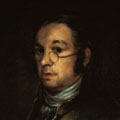
Engraving

Emulation carries with it neither envy nor unfair rivalry, but inspires a man to surpass all others by superiority alone. Such was the emulation and rivalry between Zeuxis and Parrhasius, which contributed to the improvement of both; and similar thereto was that which inspired the master-minds of Michael Angelo and Raffaelle; of Titian and Pordenone; of Albert Durer and Lucas van Leyden; of Agostino and Annibale Caracci; and we may add, in our own country, of Thomas Cole and Durand.

When the Allies entered Paris in 1815, they found in the gallery of the Louvre about two thousand works of art—the gems of the world in painting and antique sculpture—mostly the spoils of war, deposited there by the Emperor Napoleon. The selection of these works was entrusted to a commission, at the head of whom was the Baron Denon, who accompanied the Emperor in all his expeditions for this purpose. The Louvre, at this time, was the acknowledged emporium of the fine arts. The grand determination of Napoleon to place France highest in art among the nations, did not rest here.

This Dutch painter was invited to Spain by Charles V., and accompanied that monarch on his expedition to Tunis, of which he preserved some scenes that were afterwards transferred to Brussels tapestries. He followed the court for many years, and exercised his art with honor and profit, in portrait, landscape, and sacred subjects. The palace of the Prado was adorned with a number of his works, particularly eight pictures representing the Imperial progresses in Germany, and Views of Madrid, Valladolid, Naples, and London; all of which perished in the fire of 1608.

Everything that came from his pencil was precious, even in his life-time. Houbraken says that his great patron, Mr. Spiering the banker, allowed him one thousand guilders a year, and paid besides whatever sum he pleased to ask for his pictures, some of which he purchased for their weight in silver; but Sandrart informs us, with more probability, that the thousand guilders were paid to Douw by Spiering on condition that the artist should give him the choice of all the pictures he painted.

More was employed by most of the princes of Europe, who liberally rewarded him, and at every court his paintings were beheld with admiration and applause, but at none more than at those of Spain and England. He acquired an ample fortune. When he was in Portugal, the nobility of that country, in token of their esteem, presented him, in the name of their order, a gold chain valued at a thousand ducats. He closely imitated nature.

This wonderful picture is one of the most singular and beautiful works of that great master. Adopting an idea till then unknown to painters, he has created a new principle of light and shade; and in the limited space of nine feet by six, has expanded a breadth and depth of perspective which defies description. The subject he has chosen, is the adoration of the shepherds, who, after hearing the glad tidings of joy and salvation, proclaimed by the heavenly host, hasten to hail the new-born King and Saviour.

About the year 1785, Alderman J. Boydell, of London, conceived the project of establishing a 'Shakspeare Gallery,' upon a scale of grandeur and magnificence which should be in accordance with the fame of the poet, and, at the same time, reflect honor upon the state of the arts in Great Britain and throughout the world. Mr. Boydell was at this time a man of great wealth and influence, and a patron of the fine arts, being an engraver himself, and having accumulated his fortune mostly by dealings in works of that character.

Elizabeth Sirani was born at Bologna in 1638. She early exhibited the most extraordinary talent for painting, which was perfectly cultivated by her father, Gio. Andrea Sirani, an excellent disciple and imitator of Guido. She attached herself to an imitation of the best style of Guido, which unites great relief with the most captivating amenity. Her first public work appeared in 1655, when she was seventeen years of age.

In 1639, Poussin was invited to Paris by Louis XIII., who honored him on this occasion with the following autograph letter, which was an extraordinary and unusual homage to art:

"Dear and well beloved,

Paul Rembrandt van Rhyn, one of the most eminent painters and engravers of the Dutch school, was the son of a miller, and was born in 1606, at a small village on the banks of the Rhine, between Leyderdorp and Leyden, whence he was called Rembrandt van Rhyn, though his family name was Gerretz. It is said that his father, being in easy circumstances, intended him for one of the learned professions, but was induced by Rembrandt's passion for the art to allow him to follow his inclination. He entered the school of J.

Syndicate content