Painting

Many persons suppose, and maintain, that the grandeur of the monuments of the ancients, and the great size of the stones they employed for building purposes, prove that they understood mechanics better than the moderns. The least knowledge in mechanics, however, will show this opinion to be erroneous. The moderns possess powers which were unknown to the ancients, as the screw, and the hydraulic press, the power of which last is only limited by the strength of the machinery.

Matias de Torres, a Spanish painter, affected the style of Caravaggio. His compositions were half veiled in thick impenetrable shadows, which concealed the design, and sometimes left the subject a mystery. Francisco de Solis was standing before one of them, in the church of Victory at Madrid, representing a scene from the life of St. Diego, and was asked to explain the subject depicted. "It represents," said the witty painter, "San Brazo," St. Arm, nothing being distinguished but the arm of a mendicant in the background.

When Donatello was very sick, certain of his kinsfolk, who were well to do in the world, but had not visited him in many years, went to condole with him in his last illness. Before they left, they told him it was his duty to leave to them a small farm which he had in the territories of Prato, and this they begged very earnestly, though it was small and produced a very small income.

This eminent Dutch marine painter was born at Leyden, in 1610. He drew everything after nature, and was one of the most correct, spirited, and admirable designers of marine subjects. He made an incredible number of drawings on paper, heightened with India ink, all of them sketched from nature with uncommon elegance and fidelity.

Poussin not only studied every vestige of antiquity at Rome and in its environs, with the greatest assiduity while young, but he followed this practice through life.

"When the haughty and able Pope Innocent III. caused Cardinal Langton to be elected Archbishop of Canterbury in despite of King John, and compelled him to submit, to appease the latter and to admonish him, his Holiness presented him with four golden rings, set with precious stones, at the same time taking care to inform him of the many mysteries implied in them.

The largest of the temples of Thebes, and of any in Egypt, is that of Carnac, on the site of the ancient Diospolis. Diodorus describes it as thirteen stadia, or about a mile and a half in circumference, which nearly agrees with the admeasurements of Denon.

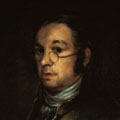
It is related that this great Spanish painter visited America in early life, and painted there many works; but the later Spanish historians have shown that he never quitted his native country; and the circumstance of his pictures being found in America, is best accounted for by the following narrative.

Had this stupendous fabric existed in ancient times, it would have been regarded as the first of the seven wonders of the world. Greater and more expensive structures have been raised, but none displaying more science, skill, and ingenuity, and none requiring such tremendous mechanical power to execute.

The Britannia Tubular Bridge was built to conduct the Chester and Holyhead Railway across the Menai Straits, to the island of Anglesea, in the Irish Sea.

Palomino relates that a superb eagle, of the bearded kind, having been captured in the royal chase, near the Prado, the king (Philip III.) gave orders to Pantoja to paint its likeness, which he did with such truthfulness that the royal bird, on seeing it, mistook it for a real eagle, and attacked the picture with such impetuosity that he tore it in pieces with his beak and talons before they could secure him. The indignant bird was then tied more carefully, and the portrait painted over again.

Syndicate content