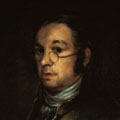
Painting

(THE MADRE PIA.)

Decorative Image

he first tender joys of a mother's love are strangely mingled with awe. Her babe is a precious gift of God, which she receives into trembling hands. A new sense of responsibility presses upon her with almost overwhelming force. Hers is the highest honor given unto woman; she accepts it with solemn joy, deeming herself all too unworthy.

Decorative Image

n proportion to a mother's ideals and ambitions for her child does her love take on a higher and purer aspect. The noblest mother is the most unselfish; she regards her child as a sacred charge, only temporarily committed to her keeping. Her care is to nurture and train him for his part in life; this is the object of her constant endeavor. Thus she comes to look upon him as hers and yet not hers.

Mrs. Anna Jameson: The Legends of the Madonna. Boston, 1896.

Crowe and Cavalcaselle: History of Painting in Italy. London, 1864. History of Painting in North Italy. London, 1871. Titian: His Life and Times. London, 1877.

Kugler: Handbook of the Italian Schools, revised by A.H. Layard. London, 1887. Handbook of the German, Flemish, and Dutch Schools, revised by J.A. Crowe. London, 1889.

  • Albertinelli, Madonna in the Pitti, 172.
  • Angelico, Fra, Madonna della Stella, 66-69, 132.
  • Barabino, N., Mater Amabilis, 154.
  • Barocci, F., Madonna del Gatto, 126.
  • Bartolommeo, Madonna in the Capella Giovanato, 30;
    • Madonnas in the Florence Academy, 31;
    • Enthroned Madonna in the Pitti, 42, 47.
  • Basaiti, Madonna in the National Gallery, 177.
  • Bellini, Giovanni, Madonna of San Giobbe, 50, 188;
    • Frari Madonna, 50

In the picture called The Potato Planters we are reminded at once of the peasants we have already seen in Going to Work. We see here married people a few years older than the young people of the other picture working together in the fields.

Though the peasant women of France have so large a share in the laborious out-of-door work on the farms, they are not unfitted for domestic duties. In the long winter evenings they devote themselves to more distinctly woman's tasks, knitting and sewing, sometimes even spinning and weaving. Their housekeeping is very simple, for they live frugally, but they know how to make the home comfortable. Many modern inventions are still unknown to them, and we should think their customs very primitive, but on this account they are perhaps even more picturesque.

Many years ago the early English poet, Sir Philip Sidney, wrote a book about an imaginary country called Arcadia, noted for the sweetness of the air and the gentle manners of the people. As he described the beauties of the scenery there, he told of "meadows enamelled with all sorts of eye-pleasing flowers; each pasture stored with sheep feeding with sober security; here a shepherd's boy piping as though he should never be old; there a young shepherdess knitting and withal singing, and it seemed that her voice comforted her hands to work, and her hands kept time to her voice-music."

In walking through a French village, we get as little idea of the home life of the people as if we were in a large town or city. The houses usually border directly upon the street, and the spaces between are closed with high walls, shutting in the thoroughfare as completely as in a city "block." Behind these barriers each family carries on its domestic affairs in the privacy of its own domain. The cour, or dooryard, is the enclosure adjoining the house, and is surrounded on all sides by buildings or walls.

The early twilight of autumn has overtaken two peasants at the close of a day's work in the field. They are gathering the potato harvest. The dried plants are first pulled up, and the potatoes carefully dug out of the holes. Then the vegetables are taken from the furrows by the basketful, and poured into brown linen sacks to be carried home on the wheelbarrow. One of these sacks is not yet quite full, and the work has been prolonged after sunset.

The artist Millet loved to draw as well as to paint. Black and white pictures had their charm for him as truly as those in color. Indeed, he once said that "tone," which is the most important part of color, can be perfectly expressed in black and white. It is therefore not strange that he made many drawings. Some of these, like the Knitting Lesson and the Woman Feeding Hens, were, as we have seen, studies for paintings. The picture called Filling the Water-Bottles was, on the other hand, a charcoal drawing, corresponding to no similar painting. It is in itself a finished work of art.

Syndicate content