Painting

There are many legends about St. Michael, who is also represented as the Archangel, or head of the whole company of angels, and most of these legends spring from a few passages in the Bible, chiefly two. One of these is in the Epistle of Jude, the ninth verse, where the archangel Michael is alluded to as "contending with the Devil." The other is in the Book of Revelation, beginning at the seventh verse of the ninth chapter:—

As we turn to the picture, famous the world over as the Sistine Madonna, we seem to be looking through a window opening into heaven. Faint in the background, yet filling the whole space, is a cloud of innumerable cherubs; out of this cloud, and enveloped by it, appear the Mother and Child.

by Estelle M. Hurll

We have been looking at fifteen pictures designed by Raphael. They are but a few of the great number painted either wholly or in part by the master, or painted by his pupils from designs and sketches made by him. He was thirty-seven years old when he died, and it was said that he died on his birthday. His life was brimful of activity as a painter.

In early days an Italian in addressing a lady used the word Madonna, which, like the French word Madame, means My Lady. Now he says Signora; Madonna would have to him an old-fashioned sound. To the rest of the world this word Madonna has come to be applied almost wholly to the Virgin Mary, with or without the child Jesus; and as Raphael painted a great many pictures of the Madonna for churches or other sacred places, a name has been given to each, drawn usually from some circumstance about it.

No one of the old Italian masters has taken such a firm hold upon the popular imagination as Raphael. Other artists wax and wane in public favor as they are praised by one generation of critics or disparaged by the next; but Raphael's name continues to stand in public estimation as that of the favorite painter in Christendom. The passing centuries do not dim his fame, though he is subjected to severe criticism; and he continues, as he began, the first love of the people.

The glory of Parma is the Cathedral, which represents the labors of many centuries. The building itself was begun in 1058, and completed in the thirteenth century. The interior was beautified by a succession of artists, one of whom was our painter Correggio. His work here was the decoration of the cupola, and he began it immediately upon finishing the frescoes in the church of S. Giovanni Evangelista.

In one of the pendentives of the cupola in the Parma Cathedral is the figure of St. John the Baptist reproduced in our illustration. The background is made to resemble somewhat the interior of a shell. On billows of clouds sits the prophet, with a lamb in his arms, and a circle of angels playing about him.

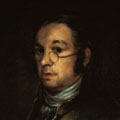
Almost every celebrated painter has at some time in his life sat for his portrait. Many have painted their own likenesses, not so much from motives of vanity, but as a matter of artistic interest. Others have posed as models to their fellow painters.

Correggio was an exception in this regard. The old biographer Vasari made many efforts to procure a portrait, and concluded that "he never took it himself, nor ever had it taken by others, seeing that he lived much in retirement."

In the northern part of Italy is the little town of Correggio, which gave its name to the painter whose works we are to study. His real name was Antonio Allegri, but in the sixteenth century a man would often be called by a nickname referring to some peculiarity, or to his birthplace. When Allegri went to Parma he was known as Antonio da Correggio, that is, Antonio from Correggio, and the name was then shortened to Correggio.

Syndicate content