Painting

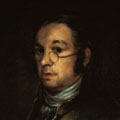
Portrait frontispiece. From a photograph of an alleged portrait of Correggio in the Parma Gallery.

1. The Holy Night.(La Notte.) (Detail.) Painted at the order of Alberto Pratoneri for the altar of his chapel in the church of S. Prospero, Reggio. Agreement signed October 10, 1522. Stolen from the church May, 1640, and taken to Modena. Now in the Dresden Gallery. Size of whole picture: 8 ft. 5 in. by 6 ft. 2 in.

In the time of Correggio the convent of S. Paolo (St. Paul) in Parma was in charge of the abbess Giovanna da Piacenza, who had succeeded an aunt in this office in 1507. She was a woman of liberal opinions, who did not let the duties of her position entirely absorb her. She still retained some social connections and was a patroness of art and culture. The daughter of a nobleman, she was a person of consequence, whose private apartments were such as a princess might have. Already a well known painter of the day had decorated one of her rooms when she heard of the rising artist Correggio.

by Estelle M. Hurll

Compiled from Ricci's Correggio, to which the references to pages apply.

1494. Antonio Allegri born at Correggio.

1511-1513. Probably in Mantua (p. 69).

1515. Madonna of St. Francis (p. 94).

1518. In Parma executing the frescoes of San Paolo, April-December (p. 152).

1520. Invitation to Parma from the Benedictines (p. 153). Marriage with Girolama Merlini (p. 185).

The story of St. Catherine is very quaintly told in the old legend.[4] She was the daughter of "a noble and prudent king," named Costus, "who reigned in Cyprus at the beginning of the third century," and "had to his wife a queen like to himself in virtuous governance." Though good people according to their light, they were pagans and worshippers of idols.

  • Vincenzo Catena, Venetian, 1470-1532.
  • Michelangelo, Florentine, 1475-1564.
  • Lorenzo Lotto, Venetian, circa 1476-1555.
  • Bazzi (Il Sodoma), Sienese, 1477-1549.
  • Giorgione, Venetian, 1477-1510.
  • Titian, Venetian, 1477-1576.
  • Palma Vecchio, Venetian, 1480-1528.
  • Lotto, Venetian, 1480-1558.
  • Raphael, Umbrian, 1483-1520.
  • Pordenone, Venetian, 1484-1539.
  • Bagnacavallo, Bolognese, 1484-1542.
  • Gaudenzio Ferrari, Milanese, 1484-1549.
  • Sebastian del Piombo, Venetian, 1485-1547.

At the time of her coronation, St. Catherine knew nothing of the Christian faith, but she had set for herself an ideal of life she was determined to carry out. It was her firm resolve not to marry. Her counsellors argued that, as she was endowed with certain qualities above all creatures, she ought to marry and transmit these gifts to posterity. The attributes they enumerated were, first, that she came of the most noble blood in the world; second, that she was the richest living heiress; third, that she was the wisest, and, fourth, the most beautiful of all human beings.

Before the child Jesus was two years old, he was taken on a journey which at that time was long and tedious. An angel appeared to Joseph one night in a dream, saying, "Arise, and take the young child and his mother, and flee into Egypt, and be thou there until I bring thee word; for Herod will seek the young child to destroy him."

The high estimation in which I have ever held the works of Rembrandt has been greatly increased by my going through this examination of his various excellencies, and such will ever be the case when the emanations of genius are investigated; like the lustre of precious stones, their luminous colour shines from the centre, not from the surface.

Syndicate content