Painting

The art of Correggio was very justly summed up by his first biographer, Vasari.

The first biographer of Correggio was Vasari, in whose "Lives of the Painters, Sculptors, and Architects" is included a brief account of this painter. The student should read this work in the last edition annotated by E. H. and E. W. Blashfield and A. A. Hopkins. Passing over the studies of the intervening critics, Julius Meyer's biography may be mentioned next, as an authoritative work, practically alone in the field for some twenty-five years. This was translated from the German by M. C. Heaton, and published in London in 1876.

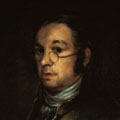
Portrait frontispiece. From a photograph of an alleged portrait of Correggio in the Parma Gallery.

1. The Holy Night.(La Notte.) (Detail.) Painted at the order of Alberto Pratoneri for the altar of his chapel in the church of S. Prospero, Reggio. Agreement signed October 10, 1522. Stolen from the church May, 1640, and taken to Modena. Now in the Dresden Gallery. Size of whole picture: 8 ft. 5 in. by 6 ft. 2 in.

In the time of Correggio the convent of S. Paolo (St. Paul) in Parma was in charge of the abbess Giovanna da Piacenza, who had succeeded an aunt in this office in 1507. She was a woman of liberal opinions, who did not let the duties of her position entirely absorb her. She still retained some social connections and was a patroness of art and culture. The daughter of a nobleman, she was a person of consequence, whose private apartments were such as a princess might have. Already a well known painter of the day had decorated one of her rooms when she heard of the rising artist Correggio.

Compiled from Ricci's Correggio, to which the references to pages apply.

1494. Antonio Allegri born at Correggio.

1511-1513. Probably in Mantua (p. 69).

1515. Madonna of St. Francis (p. 94).

1518. In Parma executing the frescoes of San Paolo, April-December (p. 152).

1520. Invitation to Parma from the Benedictines (p. 153). Marriage with Girolama Merlini (p. 185).

by Estelle M. Hurll

  • Vincenzo Catena, Venetian, 1470-1532.
  • Michelangelo, Florentine, 1475-1564.
  • Lorenzo Lotto, Venetian, circa 1476-1555.
  • Bazzi (Il Sodoma), Sienese, 1477-1549.
  • Giorgione, Venetian, 1477-1510.
  • Titian, Venetian, 1477-1576.
  • Palma Vecchio, Venetian, 1480-1528.
  • Lotto, Venetian, 1480-1558.
  • Raphael, Umbrian, 1483-1520.
  • Pordenone, Venetian, 1484-1539.
  • Bagnacavallo, Bolognese, 1484-1542.
  • Gaudenzio Ferrari, Milanese, 1484-1549.
  • Sebastian del Piombo, Venetian, 1485-1547.

The story of St. Catherine is very quaintly told in the old legend.[4] She was the daughter of "a noble and prudent king," named Costus, "who reigned in Cyprus at the beginning of the third century," and "had to his wife a queen like to himself in virtuous governance." Though good people according to their light, they were pagans and worshippers of idols.

The high estimation in which I have ever held the works of Rembrandt has been greatly increased by my going through this examination of his various excellencies, and such will ever be the case when the emanations of genius are investigated; like the lustre of precious stones, their luminous colour shines from the centre, not from the surface.

Syndicate content