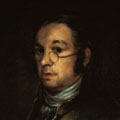
Painting

by Josef Israels

[1] The "Trippenhuis" was used as a picture gallery before the Ryksmuseum was built. It was an old patrician family mansion belonging to the Trip family. Several members of this family filled important posts in the government of the old Republic of the United Provinces, and some were burgomasters of Amsterdam.

While the world pays respectful tribute to Rembrandt the artist, it has been compelled to wait until comparatively recent years for some small measure of reliable information concerning Rembrandt the man. The sixteenth and seventeenth centuries seem to have been very little concerned with personalities. A man was judged by his work which appealed, if it were good enough, to an ever-increasing circle. There were no newspapers to record his doings and, if he chanced to be an artist, it was nobody's business to set down the details of his life.

Will the reader turn away with a shrug of the shoulder, when he sees, heading this essay, the famous name that we hear so often?

I feel like one sitting among friends at a banquet, and though many of the guests have expressed and analysed the same feelings in different toasts, I will not be restrained from expressing, in my turn, my delight in the festive gathering. I touch my glass to ensure a hearing, and I speak as my heart prompts me. It is not very important or interesting, but I am speaking in praise of him in whose honour the feast is given.

Many years ago I went to Amsterdam as an art student, to be trained under the auspices of the then famous portrait painter Kruseman. Very soon I was admitted to the master's studio, and beheld with admiration the portraits of the distinguished personages he was painting at the time.

The pink flesh-tints of the faces, the delicate treatment of the draperies and dresses, more often than not standing out against a background of dark red velvet, attracted me immensely.

What do I think of the master now, after so many years?

Come with me, reader, let us look together at the strongest expression of Rembrandt's art, viz., his picture "The Night Patrol."

Our way leads us now to the Ryksmuseum, and we sit down in the newly built "Rembrandt room," with our backs to the light, so as to obtain a full view of the picture, and we try to forget all about the struggle it cost to erect this temple of art.

But this is not the place for the sad reflections which are awakened in our minds on examining the records of him whose name the world now glorifies and raises to the skies. Better to honour the great master who, for so many centuries, has held the world in awed admiration. There is no need to-day to drag Rembrandt forth from the obscurity of the past to save him from oblivion; we were not obliged to cleanse his image from the dust of ages before showing to the world this unequalled genius to whom Holland proudly points as one of her own sons.

Ever since the beginning of human history there have been people who puzzled their brains about the reasons of things. Why things are as they are, whence we came, and whither we are going are some of the perplexing questions they have tried to answer. Some men have given all their lives to the study of these problems as a single occupation or profession. Among the ancient Greeks, who were a very intellectual nation, such men were quite numerous and were held in great esteem as teachers.

Frederick Henry of Orange, stadtholder, 1625. Princess Amalia of Solms, wife of Frederick Henry, built the Huis ten Bosch (House in the Woods) at the Hague, 1647.

William II of Orange, stadtholder, 1647. In 1650 the stadt-holderate was suppressed, and John de Witt became in 1653 chief executive of the republic for twenty years. Murdered in 1672.

John of Barneveld, Grand Pensioner, "the greatest statesman in all the history of the Netherlands" (Griffis). Executed May 24, 1619.

Michael de Ruyter, "the Dutch Nelson," died 1676.

The story of the Good Samaritan was related by Jesus to a certain lawyer as a parable, that is, a story to teach a moral lesson. The object was to show what was true neighborly conduct; and this was the story:—[6]

Syndicate content