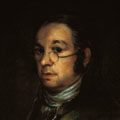
Painting

Pietro Bembo, 1470-1547, made cardinal in 1539, master of Latin style and also writer in Italian.

Jacopo Sadoleto, 1477-1547, made cardinal in 1536, writer of Latin verses, moral treatises, and commentary on Romans.

Egidio Canisio, 1470-1532, made cardinal in 1457, Latin orator and writer on philosophy, history, and theology.

Paolo Giovio, 1483-1552, bishop of Nocera 1528, historian and biographer.

Baldassare Castiglione, 1478-1529, diplomatist and scholar.

Science has long been trying to solve the problem of the origin of the human race. Great books are published by learned men to explain how the being called man came to be what he is. But centuries before the beginnings of science a wonderful poem was written on the same subject of the creation. This poem is called Genesis, that is, the Birth or Origin of things, and it forms a part of the first book of our Bible. Ever since it was written it has been one of the sacred books of many people.

Michelangelo's decoration of the Sistine Chapel ceiling did not stop with the series of panels running along the flat space in the centre. On either side, where the ceiling arches to meet the side walls, he painted a row of figures, which seem to be seated in sculptured niches. There are twelve of these figures in all, and seven of them are Hebrew prophets.

Savonarola, 1452-1498, prior of monastery of S. Marco, Florence, preacher, reformer, martyr.

Marc' Antonio, 1487-1539, engraver.

Bramante, 1444-1514, architect of St. Peter's.

Antonio da San Gallo, 1485-1546, architect of St. Peter's.

Christopher Columbus, 1436 or 1446-1506, discoverer.

Aldo Manuzio (Teobaldo Mannucci), 1450-1515, printer, established press at Venice 1490.

Vittoria Colonna, 1490-1547, poet.

In striking contrast to the bowed and sorrowful old prophet Jeremiah is the alert and eager youth Daniel. The two men were contemporaries, though there was a difference in their ages. When, in the reign of Jehoiakim, the Jews were taken into captivity to Babylon, the youth Daniel went with them, while the old prophet Jeremiah was left behind. Daniel was chosen, with three companions, to be educated at the court of the Babylonian king, Nebuchadnezzar. They were taught the Chaldean language and the sciences, and the king was delighted with their progress.

In the rows of figures which Michelangelo painted along the arched portion of the ceiling of the Sistine Chapel, the prophets are associated with sibyls. Hence, in the plan of decoration, there comes first the figure of a man, and then the figure of a woman.

Now, as the Bible contains no allusion to sibyls, it may seem strange that they should have a place in a series of Bible illustrations, and especially that they should appear side by side with the prophets. To explain this, we must learn something about the sibyls.

It is scarcely to be wondered at that the Venetian artist in whom we first find the expression of the new feelings, should have been one who by wide travel had been brought in contact with the miseries of Italy in a way not possible for those who remained sheltered in Venice. Lorenzo Lotto, when he is most himself, does not paint the triumph of man over his environment, but in his altar-pieces, and even more in his portraits, he shows us people in want of the consolations of religion, of sober thought, of friendship and affection.

The following essay owes its origin to the author's belief that Venetian painting is the most complete expression in art of the Italian Renaissance. The Renaissance is even more important typically than historically. Historically it may be looked upon as an age of glory or of shame according to the different views entertained of European events during the past five centuries. But typically it stands for youth, and youth alone—for intellectual curiosity and energy grasping at the whole of life as material which it hopes to mould to any shape.

It is as impossible to keep untouched by what happens to your neighbours as to have a bright sky over your own house when it is stormy everywhere else. Spain did not directly dominate Venice, but the new fashions of life and thought inaugurated by her nearly universal triumph could not be kept out. Her victims, among whom the Italian scholars must be reckoned, flocked to Venice for shelter, persecuted by a rule that cherished the Inquisition. Now for the first time Venetian painters were brought in contact with men of letters.

Syndicate content