Painting

In the pictures of this collection we have learned something of the work of Michelangelo as a sculptor and a painter. He was an artist whose personality was so strongly impressed upon his work that we have come thus to know, to a certain extent, the man himself. His, as we have seen, was not a happy nature, and many of the circumstances of his life conspired against his happiness.

About two thousand years ago a babe was born in the little Judæan village of Bethlehem whose life was to change all history. His name was Jesus, and every Christian country now takes his birth as a standard from which to reckon time. When we speak of the year 1900, we are counting the number of years that have passed since that event.[3] To make this clear we sometimes add the initials a.d., standing for the Latin words, Anno Domini, meaning in the year of our Lord.

Michelangelo's place in the world of art is altogether unique. His supremacy is acknowledged by all, but is understood by a few only. In the presence of his works none can stand unimpressed, yet few dare to claim any intimate knowledge of his art. The quality so vividly described in the Italian word terribilità is his predominant trait. He is one to awe rather than to attract, to overwhelm rather than to delight.

Long ago in the country of Palestine lived a lad named David, who kept his father's sheep. His free life out of doors made him strong and manly beyond his years. The Israelites were at this time at war with the Philistines, and David's quick wit and indomitable courage fitted him to play an important part in the issue of the war.

The Philistine army contained a giant named Goliath, described as "six cubits and a span" in height. That is over ten feet; but perhaps his terrible appearance, in all his armor, made him taller than he really was.

The original materials for the study of Michelangelo's life and work are the two biographies by his contemporaries, Vasari and Condivi. Vasari's was the first of these (1550), and like the other portions of his "Lives of the Painters" contained many inaccuracies. It was to correct these that Condivi published his little book a few years later. This rival effort aroused Vasari's wrath, and after Michelangelo's death he issued an enlarged edition of his own book, unscrupulously incorporating all that was valuable in Condivi's work, and adding thereto many reminiscences of the master's life.

In the mythology of ancient Greece there is no more popular figure than the little god of love, Eros, more commonly known by the Latin name Cupid. He was supposed to be the son of Venus, the goddess of love and beauty, whom he attended. He was never without his bow and quiver of arrows. Whoever was hit by one of his magic darts straightway fell in love. The wound was at once a pain and a delight. Some traditions say that he shot blindfolded,—his aim seemed often so at random. Sometimes the one whom he wounded was apparently least susceptible to love.

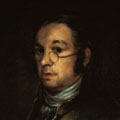
Portrait frontispiece. An oil painting in The Hall of the Portraits of Old Masters, Uffizi Gallery, Florence. The authorship of the painting is not certainly known. Symonds says that "it may perhaps be ascribed with some show of probability to Bugiardini." Bugiardini was a friend of Michelangelo's youth and a fellow student in the gardens of the Medici. That later in life he painted a portrait of his distinguished friend we know from Vasari.

When it once reached the point where its view of the world naturally sought expression in painting, as religious ideas had done before, the Renaissance found in Venice clearer utterance than elsewhere, and it is perhaps this fact which makes the most abiding interest of Venetian painting. It is at this point that we shall take it up.

Paolo was the product of four or five generations of Veronese painters, the first two or three of which had spoken the language of the whole mass of the people in a way that few other artists had ever done. Consequently, in the early Renaissance, there were no painters in the North of Italy, and few even in Florence, who were not touched by the influence of the Veronese. But Paolo's own immediate predecessors were no longer able to speak the language of the whole mass of the people.

—The painters of the end of the fifteenth century who met with the greatest success in solving these problems were Giovanni and Gentile Bellini, Cima da Conegliano, and Carpaccio, and we find each of them enjoyable to the degree that he was in touch with the life of his day. I have already spoken of pageants and of how characteristic they were of the Renaissance, forming as they did a sort of safety-valve for its chief passions. Venice, too, knew the love of glory, and the passion was perhaps only the more intense because it was all dedicated to the State.

Syndicate content