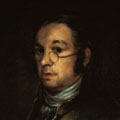
Painting

Giorgione's followers had only to exploit the vein their master hit upon to find ample remuneration. Each, to be sure, brought a distinct personality into play, but the demand for the Giorgionesque article, if I may be allowed the phrase, was too strong to permit of much deviation. It no longer mattered what the picture was to represent or where it was going to be placed; the treatment had to be always bright, romantic, and joyous.

But delightful as Longhi, Canale, and Guardi are, and imbued as they are with the spirit of their own century, they lack the quality of force, without which there can be no really impressive style. This quality their contemporary Tiepolo possessed to the utmost. His energy, his feeling for splendour, his mastery over his craft, place him almost on a level with the great Venetians of the sixteenth century, although he never allows one to forget what he owes to them, particularly to Veronese.

But even while such pictures were being painted, the spirit of the Italian Renaissance was proving inadequate to life. This was not the fault of the spirit, which was the spirit of youth. But youth cannot last more than a certain length of time. No matter how it is spent, manhood and middle age will come. Life began to show a sterner and more sober face than for a brief moment it had seemed to wear. Men became conscious that the passions for knowledge, for glory, and for personal advancement were not at the bottom of all the problems that life presented.

Thus, Venetian painting before it wholly died, flickered up again strong enough to light the torch that is burning so steadily now. Indeed, not the least attraction of the Venetian masters is their note of modernity, by which I mean the feeling they give us that they were on the high road to the art of to-day. We have seen how on two separate occasions Venetian painters gave an impulse to Spaniards, who in turn have had an extraordinary influence on modern painting.

It is scarcely to be wondered at that the Venetian artist in whom we first find the expression of the new feelings, should have been one who by wide travel had been brought in contact with the miseries of Italy in a way not possible for those who remained sheltered in Venice. Lorenzo Lotto, when he is most himself, does not paint the triumph of man over his environment, but in his altar-pieces, and even more in his portraits, he shows us people in want of the consolations of religion, of sober thought, of friendship and affection.

The following essay owes its origin to the author's belief that Venetian painting is the most complete expression in art of the Italian Renaissance. The Renaissance is even more important typically than historically. Historically it may be looked upon as an age of glory or of shame according to the different views entertained of European events during the past five centuries. But typically it stands for youth, and youth alone—for intellectual curiosity and energy grasping at the whole of life as material which it hopes to mould to any shape.

Spanish painting had its birth during the reign of Ferdinand and Isabella, and may be said to have been derived from Italy, through the influence of the Italian painters who went to Spain, and the Spanish artists who made their studies in Italy. But in spite of this strong Italian influence Spanish painting has its own characteristics which separate it from all other schools, and give it a high position on its own merits.Antonio del Rincon (1446-1500) was the first Spanish painter of whom we know.

The French school of painting does not date earlier than the sixteenth century, and the painters of that time were few in number, and little is known of them. Before the time when a French school could be said to exist the kings of France employed foreign artists to decorate their palaces and churches, and they naturally turned to the Italians for all that they needed. Hence it happened that in its earliest days the French school was almost entirely under Italian influence, and I shall first speak of French masters who studied in Italy.

In speaking of art we often contrast the useful or mechanical arts with the Fine Arts; by these terms we denote the difference between the arts which are used in making such things as are necessary and useful in civilized life, and the arts by which ornamental and beautiful things are made.

The fine arts are Architecture, Sculpture, Painting, Poetry, and Music, and though we could live if none of these existed, yet life would be far from the pleasant experience that it is often made to be through the enjoyment of these arts.

Syndicate content