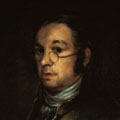
Painting

Tintoretto stayed at home, but he felt in his own person a craving for something that Titian could not teach him. The Venice he was born in was not the Venice of Titian's early youth, and his own adolescence fell in the period when Spain was rapidly making herself mistress of Italy. The haunting sense of powers almost irresistible gave a terrible fascination to Michelangelo's works, which are swayed by that sense as by a demonic presence. Tintoretto felt this fascination because he was in sympathy with the spirit which took form in colossal torsoes and limbs.

Among the Italian schools of painting the Venetian has, for the majority of art-loving people, the strongest and most enduring attraction. In the course of the present brief account of the life of that school we shall perhaps discover some of the causes of our peculiar delight and interest in the Venetian painters, as we come to realise what tendencies of the human spirit their art embodied, and of what great consequence their example has been to the whole of European painting for the last three centuries.

That feeling for reality which made the great painters look upon a picture as the representation of a cubic content of atmosphere enveloping all the objects depicted, made them also consider the fact that the given quantity of atmosphere is sure to contain other objects than those the artist wants for his purpose. He is free to leave them out, of course, but in so far as he does, so far is he from producing an effect of reality.

The Church from the first took account of the influence of colour as well as of music upon the emotions. From the earliest times it employed mosaic and painting to enforce its dogmas and relate its legends, not merely because this was the only means of reaching people who could neither read nor write, but also because it instructed them in a way which, far from leading to critical enquiry, was peculiarly capable of being used as an indirect stimulus to moods of devotion and contrition.

While all these advances were being made, the art of portraiture had not stood still. Its popularity had only increased as the years went on. Titian was too busy with commissions for foreign princes to supply the great demand there was in Venice alone. Tintoretto painted portraits not only with much of the air of good breeding of Titian's likenesses, but with even greater splendour, and with an astonishing rapidity of execution. The Venetian portrait, it will be remembered, was expected to be more than a likeness.

The painting of Greece and that of ancient Italy are so much the same that it is almost impossible to speak of them separately; the art of painting was carried from Greece to Italy by the Etruscans, and the art of ancient Rome was simply that of Greece transplanted. If Greek artists were employed by Romans, certainly their works were Greek; and if Romans painted they aimed to imitate the Greeks exactly, so that Italian painting before the time of the Christian era must be considered together with that of Greece.

The pictures known as mosaics are made by fitting together bits of marble, stone, or glass of different colors and so arranging them as to represent figures and objects of various kinds, so that at a distance they have much the same effect as that of pictures painted with brush and colors. The art of making mosaics is very ancient, and was probably invented in the East, where it was used for borders and other decorations in regular set patterns. It was not until after the time of Alexander the Great that the Greeks used this process for making pictures.

It is well known that much of the decoration of Greek edifices was in colors. Of course these paintings were put upon the marble and stone of which the structures were made. The Greeks also made small pictures and painted them on stone, just as canvas and panels of wood are now used. Such painted slabs have been found in Herculaneum, in Corneto, and in different Etruscan tombs; but the most important and satisfactory one was found at Pompeii in 1872. Since then the colors have almost vanished; but Fig. 14, from it, will show you how it appeared when found.

Vase-painting was another art very much practised by the ancients. So much can be said of it that it would require more space than we can give for its history even in outline. So I shall only say that it fills an important place in historic art, because from the thousands of ancient vases that have been found in one country and another, much has been learned concerning the history of these lands and the manners and customs of their people; occasionally inscriptions are found upon decorated vases which are of great value to scholars who study the history of the past.

Syndicate content