Painting

The Gothic order of architecture, which was perfected during this period, had a decided influence upon the painting and sculpture of the time; but this influence was not felt until Gothic architecture had reached a high point in its development. France was now the leading country of the world, and Paris came to be the most important of all cities: it was the centre from which went forth edicts as to the customs of society, the laws of dress and conduct, and even of the art of love. From France came the codes of chivalry, and the crusades, which spread to other lands, originated there.

The reawakening of Art in Italy which followed the darkness of the Middle Ages, dates from about the beginning of the fifteenth century and is called the Renaissance. The Italians have a method of reckoning the centuries which differs from ours.

Flanders formerly embraced a larger part of Belgium than is contained in the present Belgian provinces of East and West Flanders. It also covered a portion of Holland and some territory in the northwest of France. The principal Flemish towns connected with the story of Flemish art were Bruges, Tournai, Louvain, Ghent, Antwerp, Brussels, Mechlin, Liege, and Utrecht.

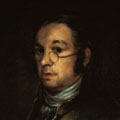
Spanish painting had its birth during the reign of Ferdinand and Isabella, and may be said to have been derived from Italy, through the influence of the Italian painters who went to Spain, and the Spanish artists who made their studies in Italy. But in spite of this strong Italian influence Spanish painting has its own characteristics which separate it from all other schools, and give it a high position on its own merits.Antonio del Rincon (1446-1500) was the first Spanish painter of whom we know.

by Camille Mauclair

The illustrations contained in this volume have been taken from different epochs of the Impressionist movement. They will give but a feeble idea of the extreme abundance of its production.

It will be beyond the scope of this volume to give a complete history of French Impressionism, and to include all the attractive details to which it might lead, as regards the movement itself and the very curious epoch during which its evolution has taken place. The proportions of this book confine its aim to the clearest possible summing up for the British reader of the ideas, the personalities and the works of a considerable group of artists who, for various reasons, have remained but little known and who have only too frequently been gravely misjudged.

It should be stated from the outset that there is nothing dogmatic about this explanation of the Impressionist theories, and that it is not the result of a preconceived plan. In art a system is not improvised. A theory is slowly evolved, nearly always unknown to the author, from the discoveries of his sincere instinct, and this theory can only be formulated after years by criticism facing the works. Monet and Manet have worked for a long time without ever thinking that theories would be built upon their paintings.

As I have said, Edouard Manet has not been entirely the originator of the Impressionist technique. It is the work of Claude Monet which presents the most complete example of it, and which also came first as regards date. But it is very difficult to determine such cases of priority, and it is, after all, rather useless. A technique cannot be invented in a day.

I have said how vain it is to class artistic temperaments under a title imposed upon them generally by circumstances and dates, rather than by their own free will. The study of Degas will furnish additional proof for it. Classed with the Impressionists, this master participates in their ideas in the sphere of composition, rather than in that of colour. He belongs to them through his modernity and comprehension of character. Only when we come to his quite recent landscapes (1896), can we link him to Monet and Renoir as colourist, and he has been more their friend than their colleague.

With Claude Monet we enter upon Impressionism in its most significant technical expression, and touch upon the principal points referred to in the second chapter of this book.

Syndicate content