Estelle M. Hurll

The church of S. Giovanni Evangelista (St. John the Evangelist), in Parma, is built with a dome-shaped cupola which Correggio filled with a fresco decoration. The subject is drawn from the life of the apostle whose name is given to the church: it is the vision of St. John on the isle of Patmos. Looking up into the dome, one seems to be looking directly into the open sky, upon the figure of Christ ascending into heaven. The apostles sit in a circle on the clouds, and beneath them the aged St. John kneels on the mountain top, gazing upwards upon the vision.

In the imagination of the ancient Greeks all human love was inspired by the goddess Aphrodite, Venus, aided by her son, the little archer Cupid. It was Cupid's office to shoot the arrows of affection. Being a mischievous fellow, he took delight in aiming his shafts at the unsuspecting. Often his victims were so oddly chosen that it seemed as if the marksman had shot at random. Some believed that he did his work blindfolded.

The apostle Matthew was employed as a tax-gatherer in Jerusalem when he became a disciple of Jesus. He was sitting one day at the receipt of customs, when Jesus passed by and said unto him, "Follow me." "And he left all, rose up and followed him."[17] Soon after, the new disciple made a great feast for the Master, scandalizing the scribes and Pharisees by inviting guests of doubtful reputation.

The old Hebrew prophet who wrote of the coming Messiah predicted that he should be "despised and rejected of men, a man of sorrows, and acquainted with grief." How fully the prophecy was realized, we may read in the narrative of the trial and crucifixion of Jesus.

The glory of Parma is the Cathedral, which represents the labors of many centuries. The building itself was begun in 1058, and completed in the thirteenth century. The interior was beautified by a succession of artists, one of whom was our painter Correggio. His work here was the decoration of the cupola, and he began it immediately upon finishing the frescoes in the church of S. Giovanni Evangelista.

In one of the pendentives of the cupola in the Parma Cathedral is the figure of St. John the Baptist reproduced in our illustration. The background is made to resemble somewhat the interior of a shell. On billows of clouds sits the prophet, with a lamb in his arms, and a circle of angels playing about him.

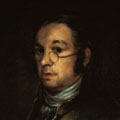
Almost every celebrated painter has at some time in his life sat for his portrait. Many have painted their own likenesses, not so much from motives of vanity, but as a matter of artistic interest. Others have posed as models to their fellow painters.

Correggio was an exception in this regard. The old biographer Vasari made many efforts to procure a portrait, and concluded that "he never took it himself, nor ever had it taken by others, seeing that he lived much in retirement."

In the northern part of Italy is the little town of Correggio, which gave its name to the painter whose works we are to study. His real name was Antonio Allegri, but in the sixteenth century a man would often be called by a nickname referring to some peculiarity, or to his birthplace. When Allegri went to Parma he was known as Antonio da Correggio, that is, Antonio from Correggio, and the name was then shortened to Correggio.

The art of Correggio was very justly summed up by his first biographer, Vasari.

The first biographer of Correggio was Vasari, in whose "Lives of the Painters, Sculptors, and Architects" is included a brief account of this painter. The student should read this work in the last edition annotated by E. H. and E. W. Blashfield and A. A. Hopkins. Passing over the studies of the intervening critics, Julius Meyer's biography may be mentioned next, as an authoritative work, practically alone in the field for some twenty-five years. This was translated from the German by M. C. Heaton, and published in London in 1876.

Syndicate content