Estelle M. Hurll

About two thousand years ago a babe was born in the little Judæan village of Bethlehem whose life was to change all history. His name was Jesus, and every Christian country now takes his birth as a standard from which to reckon time. When we speak of the year 1900, we are counting the number of years that have passed since that event.[3] To make this clear we sometimes add the initials a.d., standing for the Latin words, Anno Domini, meaning in the year of our Lord.

The original materials for the study of Michelangelo's life and work are the two biographies by his contemporaries, Vasari and Condivi. Vasari's was the first of these (1550), and like the other portions of his "Lives of the Painters" contained many inaccuracies. It was to correct these that Condivi published his little book a few years later. This rival effort aroused Vasari's wrath, and after Michelangelo's death he issued an enlarged edition of his own book, unscrupulously incorporating all that was valuable in Condivi's work, and adding thereto many reminiscences of the master's life.

Long ago in the country of Palestine lived a lad named David, who kept his father's sheep. His free life out of doors made him strong and manly beyond his years. The Israelites were at this time at war with the Philistines, and David's quick wit and indomitable courage fitted him to play an important part in the issue of the war.

The Philistine army contained a giant named Goliath, described as "six cubits and a span" in height. That is over ten feet; but perhaps his terrible appearance, in all his armor, made him taller than he really was.

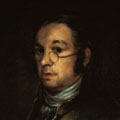
Portrait frontispiece. An oil painting in The Hall of the Portraits of Old Masters, Uffizi Gallery, Florence. The authorship of the painting is not certainly known. Symonds says that "it may perhaps be ascribed with some show of probability to Bugiardini." Bugiardini was a friend of Michelangelo's youth and a fellow student in the gardens of the Medici. That later in life he painted a portrait of his distinguished friend we know from Vasari.

In the mythology of ancient Greece there is no more popular figure than the little god of love, Eros, more commonly known by the Latin name Cupid. He was supposed to be the son of Venus, the goddess of love and beauty, whom he attended. He was never without his bow and quiver of arrows. Whoever was hit by one of his magic darts straightway fell in love. The wound was at once a pain and a delight. Some traditions say that he shot blindfolded,—his aim seemed often so at random. Sometimes the one whom he wounded was apparently least susceptible to love.

IN CONNECTION WITH THE SEVERAL WORKS HERE REPRESENTED.

The Madonna and Child and the Holy Family:—

The Latin hymn, Mater Speciosa, by Jacobus de Benedictis, translated by Dr. Neale.

David:—

Arthur Penrhyn Stanley. History of the Jewish Church, Part II. Lectures XXII.-XXV.: David.

Robert Browning. Poem, Saul.

Psalm Twenty-three.

Cupid:—

Richard Crashaw. Poem, Cupid's Cryer; out of the Greek.

In Michelangelo's statue of Moses the great Hebrew leader is represented at the height of his career. He was a prophet, a poet, a military commander, and a statesman. The story of his life will show how all these qualities could be combined in one person.

The pictures we have thus far studied in this collection are reproductions of works of sculpture. This is the art which Michelangelo loved best. He was, however, a painter also, and in the later years of his life he was even drawn into architecture. Painting was the first art he studied, but he soon laid it aside for sculpture, and after that returned to it from time to time throughout his life.

(Based on Symonds' Life of Michelangelo Buonarotti, to which the accompanying notes on pages refer.)

In the busy years of Christ's ministry we do not read of his often being with his mother Mary. He was going about the country preaching and healing, and gave himself wholly to his mission. Yet we know that the love between mother and son was constant and unchanging. From beginning to end she always had confidence in his power, and his tender care for her was among his last thoughts.

Syndicate content