S. Spooner

The antiquity of painting, as well as of sculpture, among the Egyptians, is sunk in fable. Yet it is certain that they made little or no progress in either art. Plato, who flourished about 400 B.C., says that the art of painting had been practiced by the Egyptians upwards of ten thousand years, and that there were existing in that country paintings of that high antiquity, which were neither inferior to, nor very different from, those executed by the Egyptian artists in his own time.

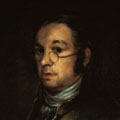
This Spanish painter was a favorite with King Charles II. He was painting his Majesty's portrait one day in the presence of the Queen mother, when the royal sitter asked him to which of the knightly orders he belonged. "To none," replied the artist, "but the order of your Majesty's servants." "Why is this?" said Charles. The Admiral of Castile, who was standing by, replied that he should have a cross immediately; and on leaving the royal presence, he sent Carreño a rich badge of Santiago, assuring him that what the king had said entitled him to wear it.

Though Durer was most famous as an engraver, yet he executed many large paintings, which occupy a distinguished place in the royal collections of Germany, and other European countries. In the imperial collection at Munich are some of the most celebrated, as Adam and Eve, the Adoration of the Magi, the Crucifixion—a grand composition—the Crowning of the Virgin, the Battle between Alexander and Darius, and many other great works.

Lanzi relates the following amusing anecdote of Giovanni da Capugnano, an artist of little merit, but whose assurance enabled him to attract considerable attention in his day. "Misled by a pleasing self-delusion, he believed himself born to become a painter; like that ancient personage, mentioned by Horace, who imagined himself the owner of all the vessels that arrived in the Athenian port. His chief talent lay in making crucifixes, to fill up the angles, and in giving a varnish to the balustrades.

The origin of Painting in Greece was unknown to Pliny, to whom we are chiefly indebted for the few fragments of the biography of Greek artists; he could only obtain his information from Greek writers, of whom he complains that they have not been very attentive to their accustomed accuracy. It is certain, however, that the arts were practiced in Egypt and in the East, many ages before they were known in Greece, and it is the common opinion that they were introduced into that country from Egypt and Asia, through the channel of the Phœnecian traders.

Palomino was one day in company with Carreño at the house of Don Pedro de Arce, when a discussion arose about the merits of a certain copy of Titian's St. Margaret, which hung in the room After all present had voted it execrable, Carreño quietly remarked, "It at least has the merit of showing that no man need despair of improving in art, for I painted it myself when I was a beginner."

Durer derived most of his fame from his engravings, and he is allowed to have surpassed every artist of his time in this branch of art. Born in the infancy of the art, he carried engraving to a perfection that has hardly been surpassed. When we consider that, without any models worthy of imitation, he brought engraving to such great perfection, we are astonished at his genius, and his own resources. Although engraving has had the advantage and experience of more than three centuries, it would perhaps be difficult to select a specimen of executive excellence surpassing his print of St.

Sandrart relates the following anecdote of Christopher Schwarts, a famous German painter, which, if true, redounds more to his ingenuity than to his credit. Having been engaged to paint the ceiling of the Town Hall at Munich by the day, his love of dissipation induced him to neglect his work, so that the magistrates and overseers of the work were frequently obliged to hunt him out at the cabaret.

The most remarkable quality of this distinguished Genoese painter was his rapidity of operation. He began to paint when ten years old, under the eye of his father, Giovanni Cambiaso, who evinced good taste in setting him to copy some works by the correct and noble Mantegna.

The following curious account of the removal of the obelisk in the Circus Vaticanus to the centre of St. Peter's square, by Domenico Fontana, is extracted from Milizia's life of that famous architect. It shows plainly that the Egyptians must have attained great skill and perfection in mechanics and engineering, to have been able to quarry out obelisks at least a third larger, and convey them often several hundred miles, to the places where they erected them.

Syndicate content