Architecture

The largest of the temples of Thebes, and of any in Egypt, is that of Carnac, on the site of the ancient Diospolis. Diodorus describes it as thirteen stadia, or about a mile and a half in circumference, which nearly agrees with the admeasurements of Denon.

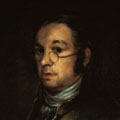
It is related that this great Spanish painter visited America in early life, and painted there many works; but the later Spanish historians have shown that he never quitted his native country; and the circumstance of his pictures being found in America, is best accounted for by the following narrative.

Had this stupendous fabric existed in ancient times, it would have been regarded as the first of the seven wonders of the world. Greater and more expensive structures have been raised, but none displaying more science, skill, and ingenuity, and none requiring such tremendous mechanical power to execute.

The Britannia Tubular Bridge was built to conduct the Chester and Holyhead Railway across the Menai Straits, to the island of Anglesea, in the Irish Sea.

Palomino relates that a superb eagle, of the bearded kind, having been captured in the royal chase, near the Prado, the king (Philip III.) gave orders to Pantoja to paint its likeness, which he did with such truthfulness that the royal bird, on seeing it, mistook it for a real eagle, and attacked the picture with such impetuosity that he tore it in pieces with his beak and talons before they could secure him. The indignant bird was then tied more carefully, and the portrait painted over again.

Donatello died on the 13th of December, 1466. He was buried with great pomp and solemnity in the church of San Lorenzo, near the tomb of Cosmo, as he himself had commanded (for he had purchased the right), "to the end," as he said, "that his body might be near him when dead, as his spirit had ever been near him when in life." Bottari observes that another reason for his choice of San Lorenzo, may have been that many of his works were in that church.

This eminent Dutch marine painter was born at Leyden, in 1610. He drew everything after nature, and was one of the most correct, spirited, and admirable designers of marine subjects. He made an incredible number of drawings on paper, heightened with India ink, all of them sketched from nature with uncommon elegance and fidelity.

Poussin not only studied every vestige of antiquity at Rome and in its environs, with the greatest assiduity while young, but he followed this practice through life.

The genius of Poussin seems to have gained vigor with age. Nearly his last works, which were begun in 1660, and sent to Paris 1664, were the four pictures, allegorical of the seasons, which he painted for the Duc de Richelieu. He chose the terrestrial paradise, in all the freshness of creation, to designate spring. The beautiful story of Boaz and Ruth formed the subject of summer. Autumn was aptly pictured, in the two Israelites bearing the bunch of grapes from the Promised Land. But the masterpiece was Winter, represented in the Deluge.

In the Cathedral at Worms, over the altar, is a very old painting, in which the Virgin is represented throwing the infant Jesus into the hopper of a mill; while from the other side he issues, changed into wafers or little morsels of bread, which the priests are administering to the people.

The temple of Luxor is about one and a fourth mile above that of Carnac, and though it is of smaller dimensions it is in a superior style of architecture, and in more complete preservation. The entrance is thought to surpass everything else that Egypt presents. In front are the two finest obelisks in the world, formed of rose-colored granite, and rising, as Denon supposes, after allowing for the portion buried in the ground, to the height of one hundred feet. But the objects which most attract attention, are the sculptures which cover the east wing of the northern front.

Syndicate content