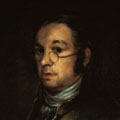
Engraving

This Dutch painter was invited to Spain by Charles V., and accompanied that monarch on his expedition to Tunis, of which he preserved some scenes that were afterwards transferred to Brussels tapestries. He followed the court for many years, and exercised his art with honor and profit, in portrait, landscape, and sacred subjects. The palace of the Prado was adorned with a number of his works, particularly eight pictures representing the Imperial progresses in Germany, and Views of Madrid, Valladolid, Naples, and London; all of which perished in the fire of 1608.

This noble lady of Cremona (born about 1530), was one of six sisters, all amiable, and much distinguished in arts and letters. She displayed a taste for drawing at a very early age, and soon became the best pupil in the school of Antonio Campi. One of her early sketches, of a boy caught with his hand in the claw of a lobster, with a little girl laughing at his plight, was in possession of Vasari, and by him esteemed worthy of a place in a volume which he had filled with drawings by the most famous masters of that great age.

Like his father, the younger Van de Velde designed everything from nature, and his compositions are distinguished by a more elegant and tasteful arrangement of his objects, than is to be found in the productions of any other painter of marines.

"Painting is an imitation by means of lines and colors, on some superfices, of everything that can be seen under the sun; its end is to please.

Principles that every man capable of reasoning may learn:—There can be nothing represented,

  • Without light,
  • Without form,
  • Without color,
  • Without distance,
  • Without an instrument, or medium.

Things which are not to be learned, and which make an essential part of painting.

Homer represents the Harpies as the rapacious goddesses of the storms, residing near the Erinnyes, or the Ocean, before the jaws of hell. If any person was so long absent from home that it was not known what had become of him, and he was supposed to be dead, it was commonly said, "The Harpies have carried him off." Hesiod represents them as young virgins of great beauty.

The name of Heliopolis, or City of the Sun, was given by the Greeks to the Egyptian City of On. It was situated a little to the north of Memphis, was one of the largest cities of Egypt during the reign of the Pharaohs, and so adorned with statues as to be esteemed one of the first sacred cities in the kingdom. The temple dedicated to Re, was a magnificent building, having in front an avenue of sphynxes, celebrated in history, and adorned with several obelisks, raised by Sethosis Rameses, B.C. 1900.

Sebastian Gomez, the mulatto slave of Murillo, is said to have become enamored of art while performing the menial offices of his master's studio. Like Erigonus, the color grinder of Nealces, or like Pareja, the mulatto of Velasquez, he devoted his leisure to the secret study of the principles of drawing, and in time acquired a skill with the brush rivalled by few of the regular scholars of Murillo.

The tubes were floated to the places whence they were elevated to their positions on eight huge pontoons, fitted with valves and pumps to exhaust the water from them, when all was ready to float the prodigious iron beams. These pontoons or boxes were each 90 feet long, 25 feet wide, and 15 feet deep. The pontoons having been placed under one of the tubes (sections), the floating was easily effected, and the operation is thus described by the "Assistant Engineer."

In 1593 the Emperor of Morocco applied to Philip II. for the loan of a painter, to which the latter made answer that they had in Spain two sorts of painters—the ordinary and the excellent—and desired to know which his infidel brother preferred. "Kings should always have the best," replied the Moor; and so Philip sent him Blas de Prado to Fez. There he painted various works for the palace, and a portrait of the monarch's daughter, to the great satisfaction of her father.

Her name having become famous in Italy, in 1559, the King of Spain ordered the Duke of Alba, who was then at Rome, to invite her to the court of Madrid. She arrived there in the same year, and was received with great distinction, and lodged in the palace. Her first work was the portrait of the king, who was so much pleased with the performance that he rewarded her with a diamond worth 1500 ducats, and settled upon her a pension of 200 ducats.

Syndicate content