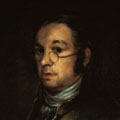
Engraving

This Dutch painter was invited to Spain by Charles V., and accompanied that monarch on his expedition to Tunis, of which he preserved some scenes that were afterwards transferred to Brussels tapestries. He followed the court for many years, and exercised his art with honor and profit, in portrait, landscape, and sacred subjects. The palace of the Prado was adorned with a number of his works, particularly eight pictures representing the Imperial progresses in Germany, and Views of Madrid, Valladolid, Naples, and London; all of which perished in the fire of 1608.

This noble lady of Cremona (born about 1530), was one of six sisters, all amiable, and much distinguished in arts and letters. She displayed a taste for drawing at a very early age, and soon became the best pupil in the school of Antonio Campi. One of her early sketches, of a boy caught with his hand in the claw of a lobster, with a little girl laughing at his plight, was in possession of Vasari, and by him esteemed worthy of a place in a volume which he had filled with drawings by the most famous masters of that great age.

This eminent artist was the son of the preceding, and born at Amsterdam in 1633. He had already acquired a distinguished reputation in his native country for his admirable cabinet pictures of marine subjects, when he accompanied his father to England, where his talents not only recommended him to the patronage of the king, but to the principal nobility and personages of his court, for whom he executed many of his most beautiful works. "The palm," says Lord Orford, "is not less disputed with Raffaelle for history, than with Van de Velde for sea-pieces." He died in 1707.

The long and honorable race of Poussin was now nearly run. Early in the following year, 1665, he was slightly affected by palsy, and the only picture of figures that he painted afterwards was the Samaritan Woman at the Well, which he sent to M. de Chantelou, with a note, in which he says, "This is my last work; I have already one foot in the grave." Shortly afterwards he wrote the following letter to M. Felibien: "I could not answer the letter which your brother, M. le Prieur de St.

"The oldest oil painting now in existence, is believed to be one of the Madonna and infant Jesus in her arms, with an Eastern style of countenance. It is marked DCCCLXXXVI. (886). This singular and valuable painting formed part of the treasures of art in the old palace of the Florentine Republic, and was purchased by the Director Bencivenni from a broker in the street, for a few livres."

There were many colossal statues of Memnon in Egypt, but the most remarkable were the two in the Memnonium or palace of Memnon, at Thebes. The largest is of rose-colored granite, and stood in the centre of the principal court; its height was sixty-four feet, and its remains are scattered forty feet around it.

Sebastian Gomez, the mulatto slave of Murillo, is said to have become enamored of art while performing the menial offices of his master's studio. Like Erigonus, the color grinder of Nealces, or like Pareja, the mulatto of Velasquez, he devoted his leisure to the secret study of the principles of drawing, and in time acquired a skill with the brush rivalled by few of the regular scholars of Murillo.

The tubes were floated to the places whence they were elevated to their positions on eight huge pontoons, fitted with valves and pumps to exhaust the water from them, when all was ready to float the prodigious iron beams. These pontoons or boxes were each 90 feet long, 25 feet wide, and 15 feet deep. The pontoons having been placed under one of the tubes (sections), the floating was easily effected, and the operation is thus described by the "Assistant Engineer."

In 1593 the Emperor of Morocco applied to Philip II. for the loan of a painter, to which the latter made answer that they had in Spain two sorts of painters—the ordinary and the excellent—and desired to know which his infidel brother preferred. "Kings should always have the best," replied the Moor; and so Philip sent him Blas de Prado to Fez. There he painted various works for the palace, and a portrait of the monarch's daughter, to the great satisfaction of her father.

Her name having become famous in Italy, in 1559, the King of Spain ordered the Duke of Alba, who was then at Rome, to invite her to the court of Madrid. She arrived there in the same year, and was received with great distinction, and lodged in the palace. Her first work was the portrait of the king, who was so much pleased with the performance that he rewarded her with a diamond worth 1500 ducats, and settled upon her a pension of 200 ducats.

Syndicate content