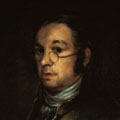
Painting

The pyramids of Egypt, especially the two largest of the group of Jizeh or Gize, are the most stupendous masses of buildings in stone that human labor has ever been known to accomplish, and have been the wonder of ancient and modern times.—The number of the Egyptian pyramids, large and small, is very considerable; they are situated on the west bank of the Nile, and extend in an irregular line, and in groups at some distance from each other, from the neighborhood of Jizeh, in 30° N. Latitude, as far as sixty or seventy miles south of that place.

These Spanish painters contended in 1689 for the office of Master of the Works in the Cathedral of Granada. Bocanegra was excessively vain and overbearing, and boasted his superiority to all the artists of his time; but Ardemans, though a stranger in Granada, was not to be daunted, and a trial of skill, "a duel with pencils," was accordingly arranged between them, which was, that each should paint the other's portrait.

This wonderful genius was of royal descent, and born at Syracuse about B.C. 287. He was a relative of king Hiero, who held him in the highest esteem and favor, though he does not appear to have held any public office, preferring to devote himself entirely to science. Such was his enthusiasm, that he appears at times to have been so completely absorbed in contemplation and calculations, as to be totally unconscious of what was passing around him.

Elizabeth Sirani was born at Bologna in 1638. She early exhibited the most extraordinary talent for painting, which was perfectly cultivated by her father, Gio. Andrea Sirani, an excellent disciple and imitator of Guido. She attached herself to an imitation of the best style of Guido, which unites great relief with the most captivating amenity. Her first public work appeared in 1655, when she was seventeen years of age.

Poussin, naturally of a peaceful turn of mind, fond of retirement and the society of a few select literary friends, was disgusted with the ostentation of the court and the cabals by which he was surrounded; he secretly sighed for the quiet felicity he had left at Rome, and resolved to return thither without delay. For this purpose, he solicited and obtained leave of the king to visit Italy and settle his affairs, and fetch his wife; but when he had once crossed the Alps, no inducement could prevail on him to revisit his native country, or even to leave Rome.

His works are numerous, and are dispersed in various public and private collections of Europe; and when they are offered for sale they command enormous prices. There are eight of his pictures in the English National Gallery; one of these, the Woman taken in Adultery, formerly in the Orleans collection, sold for £5000.

Rosa da Tivoli acquired a wonderful facility in design and execution, for which reason he was named Mercurius by the Bentvogel Society. A remarkable instance of his powers is recorded by C. le Blond, then a student at Rome.

The upper part of this pyramid is still covered with the original polished coating of marble, to the distance of 140 feet from the top towards the base, which makes the ascent extremely difficult and dangerous. Mr. Wilde, in his "Narrative of a Voyage to Madeira, Teneriffe, and along the shore of the Mediterranean," published in 1840, made the ascent to the top, and thus describes the adventure:

The Spanish painter Antonio Pereda married Doña Maria de Bustamente, a woman of some rank, and greater pretension, who would associate only with people of high fashion, and insisted on having a duenna in constant waiting in her antechamber, like a lady of quality.

This eminent architect was one of those illustrious men, who, having conceived and matured a grand design, proceed, cool, calm, and indefatigable, to put it in execution, undismayed by obstacles that seem insuperable, by poverty, want, and what is worse, the jeers of men whose capacities are too limited to comprehend their sublime conceptions. The world is apt to term such men enthusiasts, madmen, or fools, till their glorious achievements stamp them almost divinely inspired.

Syndicate content