Painting

Many years ago the early English poet, Sir Philip Sidney, wrote a book about an imaginary country called Arcadia, noted for the sweetness of the air and the gentle manners of the people. As he described the beauties of the scenery there, he told of "meadows enamelled with all sorts of eye-pleasing flowers; each pasture stored with sheep feeding with sober security; here a shepherd's boy piping as though he should never be old; there a young shepherdess knitting and withal singing, and it seemed that her voice comforted her hands to work, and her hands kept time to her voice-music."

In walking through a French village, we get as little idea of the home life of the people as if we were in a large town or city. The houses usually border directly upon the street, and the spaces between are closed with high walls, shutting in the thoroughfare as completely as in a city "block." Behind these barriers each family carries on its domestic affairs in the privacy of its own domain. The cour, or dooryard, is the enclosure adjoining the house, and is surrounded on all sides by buildings or walls.

The early twilight of autumn has overtaken two peasants at the close of a day's work in the field. They are gathering the potato harvest. The dried plants are first pulled up, and the potatoes carefully dug out of the holes. Then the vegetables are taken from the furrows by the basketful, and poured into brown linen sacks to be carried home on the wheelbarrow. One of these sacks is not yet quite full, and the work has been prolonged after sunset.

The artist Millet loved to draw as well as to paint. Black and white pictures had their charm for him as truly as those in color. Indeed, he once said that "tone," which is the most important part of color, can be perfectly expressed in black and white. It is therefore not strange that he made many drawings. Some of these, like the Knitting Lesson and the Woman Feeding Hens, were, as we have seen, studies for paintings. The picture called Filling the Water-Bottles was, on the other hand, a charcoal drawing, corresponding to no similar painting. It is in itself a finished work of art.

The city of Antwerp was at one time famous for its commercial and industrial interests, and it was besides an important centre of art. Here in the seventeenth century lived the two foremost Flemish painters, Peter Paul Rubens, and Anthony Van Dyck. The Flemish industries had chiefly to do with the making of beautiful things. Among them were tapestries in rich designs and many colors, used for wall hangings. The Flemish weavers were also skilled in making fabrics of silk and velvet.

The student of Van Dyck's art naturally classifies the painter's works into four groups, corresponding chronologically to the four successive periods of his life. There was first the short period of his youth in Antwerp, when Rubens was the dominating influence upon his work. The portrait of Van der Geest, in the National Gallery, belongs to this time.

We often read in history of the rejoicing throughout a kingdom over the birth of a prince: messengers are sent from place to place to proclaim the glad news, congratulations and gifts follow, every possible care is taken for the nurture and protection of the precious young life.

It has been reserved for our own day to produce two superb works by English writers on Van Dyck. The first to appear was that by Ernest Law, "a storehouse of information," on the paintings by Van Dyck in the Royal Collections. The second is the definitive biography by Lionel Cust: "Anthony Van Dyck; An Historical Study of his Life and Works." The author is the director of the English National Portrait Gallery, and has had exceptional opportunities for the examination of Van Dyck's paintings. His work has been done with great thoroughness and care.

A gentleman has brought his little boy to our painter's studio for a portrait sitting. Father and son are close friends and understand each other well. On the way they have talked of the picture that is to be made, and the boy has asked many questions about it. It is rather a tedious prospect to an active child to have to sit still a long time. But his father's companionship is his greatest delight, and it is a rare treat to both to have a whole morning together.

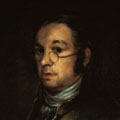
Frontispiece. Portrait of Van Dyck. Detail of a portrait of Van Dyck and John Digby, Earl of Bristol. Painted about 1640. Formerly in the Isabel Farnese Collection in the palace of San Ildefonso; now in the Prado Gallery, Madrid. Cust, p. 285.

Syndicate content