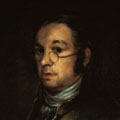
Painting

Writers:—

  • Ben Jonson, 1573 or 1574-1637.
  • Robert Herrick, 1591-1674.
  • George Herbert, 1593-1632.
  • Edmund Waller, 1605 or 1606-1687.
  • Sir William Killigrew, 1605-1693.
  • Sir John Suckling, 1608 or 1609-1641 or 1642.
  • John Milton, 1608-1674.
  • Thomas Killigrew, 1611-1682.
  • John Evelyn, 1620-1706 (author of "Memoirs").

Architect:—

  • Inigo Jones, 1572-1653.

Royalists:—

In the distant past which we call the age of fable lived the cunning craftsman Dædalus of Athens. One of his most curious inventions was a labyrinth which he constructed for Minos, the king of Crete. Having at length displeased this king he resolved to flee from the island with his son Icarus. It was impossible to escape by way of the sea without detection, but Dædalus was not discouraged.

(By Sir Peter Lely, after Van Dyck)

Charles I of England was the second king of the Stuart dynasty, whose despotic tendencies made the seventeenth century a memorable period in history. He ascended the throne at the age of twenty-five, and began at once to assert his belief in the divine right of kings. Indignant at the restraints which Parliament set upon his power, he dissolved this body and ruled alone.

On the summit of Monte Pellegrino, in the island of Sicily, stands a colossal statue of St. Rosalia. Like the old Greek statue of Victory on the island of Samothrace,[8] or to use a modern instance, like the statue of Liberty on Bedloe's Island in New York harbor, St. Rosalia serves as a beacon to mariners. The Sicilians hold the saint in great reverence, and celebrate her memory in two annual festivals. From the eleventh to the fifteenth of July are horse-races, regattas, illuminations, and all sorts of gayeties in her honor. In September there is a solemn procession to her chapel.

(Detail of Children of Charles I.)

The Prince Charles of our picture was the son of Charles I. and Henrietta Maria, and bore the title of the Prince of Wales. He was born on the morning of May 29, 1630, and there was great rejoicing in the royal household that he was a fine strong baby. The king at once rode in state to St. Paul's Cathedral to give thanks for the birth of an heir. While the procession was on its way a bright star appeared in the noonday sky. This was hailed as a good omen, and an epigram was composed on the occasion:—

St. Martin was born during the reign of the Emperor Constantine the Great, and was the son of a Roman soldier. He himself entered the army at an early age, and was sent into Gaul with a regiment of cavalry. Among his comrades he was loved for his mildness of temper and his generosity.

The life of our Lord, which began in the Bethlehem manger, culminated on the cross of Mount Calvary. In our picture we see the Man of Sorrows in his last moments of suffering. How it came about that he was crucified is fully related by the four evangelists.[19]

[19] St. Matthew, chapters xxvi. and xxvii.; St. Mark, chapters xiv. and xv.; St. Luke, chapters xxii. and xxiii.; St. John, chapters xviii. and xix.

The legend of St. Cecilia is not so tragic as that of St. Catherine. According to the story, Cecilia was a beautiful young girl who belonged to a noble Roman family of the third century.

Richard III. (1483-1485), Henry VII. (1485-1509), Henry VIII. (1509-1547), kings.

Sebastian Cabot (1477-15?), discoverer.

The Transfiguration is a picture divided into two parts. The lower part is filled with more figures than the upper and contains more action. On one side are nine of the disciples of Jesus; on the other is a crowd of people in company with a father who brings his son to be healed. He gives an account of his boy's sickness in these words:—

"He is mine only child. And lo! a spirit taketh him, and he suddenly crieth out; and it teareth him that he foameth again; and, bruising him, hardly departeth from him."[7]

Syndicate content