Painting

The painter Van Dyck was the son of a rich merchant of Antwerp, and lacked no opportunities for the training of his artistic gifts. He was fortunate also in meeting ready appreciation wherever he went. In Italy, in Flanders, and finally in England, his paintings were highly valued. His life was passed amid luxurious surroundings, in the society of noblemen and princes. His was a brilliant and successful career.

The city of Antwerp was at one time famous for its commercial and industrial interests, and it was besides an important centre of art. Here in the seventeenth century lived the two foremost Flemish painters, Peter Paul Rubens, and Anthony Van Dyck. The Flemish industries had chiefly to do with the making of beautiful things. Among them were tapestries in rich designs and many colors, used for wall hangings. The Flemish weavers were also skilled in making fabrics of silk and velvet.

The student of Van Dyck's art naturally classifies the painter's works into four groups, corresponding chronologically to the four successive periods of his life. There was first the short period of his youth in Antwerp, when Rubens was the dominating influence upon his work. The portrait of Van der Geest, in the National Gallery, belongs to this time.

We often read in history of the rejoicing throughout a kingdom over the birth of a prince: messengers are sent from place to place to proclaim the glad news, congratulations and gifts follow, every possible care is taken for the nurture and protection of the precious young life.

It has been reserved for our own day to produce two superb works by English writers on Van Dyck. The first to appear was that by Ernest Law, "a storehouse of information," on the paintings by Van Dyck in the Royal Collections. The second is the definitive biography by Lionel Cust: "Anthony Van Dyck; An Historical Study of his Life and Works." The author is the director of the English National Portrait Gallery, and has had exceptional opportunities for the examination of Van Dyck's paintings. His work has been done with great thoroughness and care.

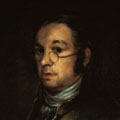
Frontispiece. Portrait of Van Dyck. Detail of a portrait of Van Dyck and John Digby, Earl of Bristol. Painted about 1640. Formerly in the Isabel Farnese Collection in the palace of San Ildefonso; now in the Prado Gallery, Madrid. Cust, p. 285.

A gentleman has brought his little boy to our painter's studio for a portrait sitting. Father and son are close friends and understand each other well. On the way they have talked of the picture that is to be made, and the boy has asked many questions about it. It is rather a tedious prospect to an active child to have to sit still a long time. But his father's companionship is his greatest delight, and it is a rare treat to both to have a whole morning together.

In early days an Italian in addressing a lady used the word Madonna, which, like the French word Madame, means My Lady. Now he says Signora; Madonna would have to him an old-fashioned sound. To the rest of the world this word Madonna has come to be applied almost wholly to the Virgin Mary, with or without the child Jesus; and as Raphael painted a great many pictures of the Madonna for churches or other sacred places, a name has been given to each, drawn usually from some circumstance about it.

No one of the old Italian masters has taken such a firm hold upon the popular imagination as Raphael. Other artists wax and wane in public favor as they are praised by one generation of critics or disparaged by the next; but Raphael's name continues to stand in public estimation as that of the favorite painter in Christendom. The passing centuries do not dim his fame, though he is subjected to severe criticism; and he continues, as he began, the first love of the people.

In the story of Abraham, as related in our Bible, we read of the wandering and adventurous life of the patriarch as he moved from place to place. In process of time he became "very rich in cattle, in silver, and in gold." He was as brave as he was industrious. When Lot, his brother's son, who dwelt in Sodom, was taken captive by some foreign kings who had conquered the king of Sodom, Abraham armed his large company of servants and went to the rescue. He recovered not only his nephew, but all the booty which the victors had taken.

Syndicate content