Painting

by Estelle M. Hurll

We have been looking at fifteen pictures designed by Raphael. They are but a few of the great number painted either wholly or in part by the master, or painted by his pupils from designs and sketches made by him. He was thirty-seven years old when he died, and it was said that he died on his birthday. His life was brimful of activity as a painter.

In early days an Italian in addressing a lady used the word Madonna, which, like the French word Madame, means My Lady. Now he says Signora; Madonna would have to him an old-fashioned sound. To the rest of the world this word Madonna has come to be applied almost wholly to the Virgin Mary, with or without the child Jesus; and as Raphael painted a great many pictures of the Madonna for churches or other sacred places, a name has been given to each, drawn usually from some circumstance about it.

No one of the old Italian masters has taken such a firm hold upon the popular imagination as Raphael. Other artists wax and wane in public favor as they are praised by one generation of critics or disparaged by the next; but Raphael's name continues to stand in public estimation as that of the favorite painter in Christendom. The passing centuries do not dim his fame, though he is subjected to severe criticism; and he continues, as he began, the first love of the people.

In the story of Abraham, as related in our Bible, we read of the wandering and adventurous life of the patriarch as he moved from place to place. In process of time he became "very rich in cattle, in silver, and in gold." He was as brave as he was industrious. When Lot, his brother's son, who dwelt in Sodom, was taken captive by some foreign kings who had conquered the king of Sodom, Abraham armed his large company of servants and went to the rescue. He recovered not only his nephew, but all the booty which the victors had taken.

Within the last forty years the methods of criticism as applied to art have undergone so many changes that there has been a rapid succession of biographers and critics of Raphael until the student reader of to-day scarcely knows whom to believe. The time was when Vasari, in his important "Lives of the Painters," was the accepted source of information, and all current writers borrowed unquestioningly from him both facts and opinions; but the old chronicler was too often influenced by popular gossip and personal prejudice to be depended upon.

Another of the Bible scenes which Raphael painted was one which is told in the New Testament concerning the Lord Jesus and his Apostles. Some of these, as Peter and Andrew, James and John, were fishermen who lived near the lake of Gennesaret in Galilee, and had spent most of their lives in their boats. They had been much with their Master, and sometimes left their boats to go with him through the country, when he talked with them and healed the sick, and told the glad tidings, for that is what the word Gospel means.

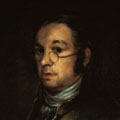
Portrait frontispiece. Painted on wood, 1506, as a gift from the painter to his uncle, Simone Ciarla, of Urbino. In 1588 the portrait passed from Urbino to the Academy of St. Luke, Rome. Later it was sold to Cardinal Leopoldo de' Medici for the Hall of Portraits of the Old Masters in the Uffizi Gallery, Florence.

In connection with St. Catherine:—

Latin Hymn, Vox Sonora Nostri Chori, St. Catherine's Day. Translated by David Morgan.

Mrs. Jameson. Sacred and Legendary Art.

S. Baring-Gould. Lives of the Saints. Volume for November.

In connection with St. Cecilia:—

S. Baring-Gould. Lives of the Saints. Volume for November.

Mrs. Jameson. Sacred and Legendary Art.

Chaucer. Second Nonnes Tale.

The Sacrifice at Lystra was another of the great tapestries, and was in the second series of five which had to do with the life of St. Paul as recorded in the Acts of the Apostles. The apostle was on a journey with his companion Barnabas, and they were teaching and healing as they went. At Lystra they had performed a wonderful cure in healing a man who had been a cripple from his birth.

Syndicate content