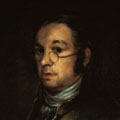
Painting

Charles VIII. (1483-1498), king.

Rabelais (1483 or 1495-1553), satirist.

In the same room which holds Parnassus, with Poetry above on the ceiling, there is another wall painting by Raphael, which commonly bears the name of The School of Athens, though that name was not originally applied to it. In the ceiling above is a figure representing Philosophy, and the picture below carries out the idea in its presentation of an assembly of scholars.

Ferdinand (died 1516) and Isabella (died 1504), king and queen, beginning to reign in 1474.

In the series of rooms in the Vatican palace, of which one contains Parnassus, and another the Expulsion of Heliodorus and the Liberation of Peter, there is a room, the first of the series, which is called the Room of the Great Fire, because it contains a large picture of the Conflagration in the Borgo.

There are many legends about St. Michael, who is also represented as the Archangel, or head of the whole company of angels, and most of these legends spring from a few passages in the Bible, chiefly two. One of these is in the Epistle of Jude, the ninth verse, where the archangel Michael is alluded to as "contending with the Devil." The other is in the Book of Revelation, beginning at the seventh verse of the ninth chapter:—

As we turn to the picture, famous the world over as the Sistine Madonna, we seem to be looking through a window opening into heaven. Faint in the background, yet filling the whole space, is a cloud of innumerable cherubs; out of this cloud, and enveloped by it, appear the Mother and Child.

The apostle Matthew was employed as a tax-gatherer in Jerusalem when he became a disciple of Jesus. He was sitting one day at the receipt of customs, when Jesus passed by and said unto him, "Follow me." "And he left all, rose up and followed him."[17] Soon after, the new disciple made a great feast for the Master, scandalizing the scribes and Pharisees by inviting guests of doubtful reputation.

The old Hebrew prophet who wrote of the coming Messiah predicted that he should be "despised and rejected of men, a man of sorrows, and acquainted with grief." How fully the prophecy was realized, we may read in the narrative of the trial and crucifixion of Jesus.

The glory of Parma is the Cathedral, which represents the labors of many centuries. The building itself was begun in 1058, and completed in the thirteenth century. The interior was beautified by a succession of artists, one of whom was our painter Correggio. His work here was the decoration of the cupola, and he began it immediately upon finishing the frescoes in the church of S. Giovanni Evangelista.

In one of the pendentives of the cupola in the Parma Cathedral is the figure of St. John the Baptist reproduced in our illustration. The background is made to resemble somewhat the interior of a shell. On billows of clouds sits the prophet, with a lamb in his arms, and a circle of angels playing about him.

Syndicate content