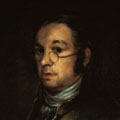
Painting

IN CONNECTION WITH THE SEVERAL WORKS HERE REPRESENTED.

The Madonna and Child and the Holy Family:—

The Latin hymn, Mater Speciosa, by Jacobus de Benedictis, translated by Dr. Neale.

David:—

Arthur Penrhyn Stanley. History of the Jewish Church, Part II. Lectures XXII.-XXV.: David.

Robert Browning. Poem, Saul.

Psalm Twenty-three.

Cupid:—

Richard Crashaw. Poem, Cupid's Cryer; out of the Greek.

The pictures we have thus far studied in this collection are reproductions of works of sculpture. This is the art which Michelangelo loved best. He was, however, a painter also, and in the later years of his life he was even drawn into architecture. Painting was the first art he studied, but he soon laid it aside for sculpture, and after that returned to it from time to time throughout his life.

(Based on Symonds' Life of Michelangelo Buonarotti, to which the accompanying notes on pages refer.)

In the busy years of Christ's ministry we do not read of his often being with his mother Mary. He was going about the country preaching and healing, and gave himself wholly to his mission. Yet we know that the love between mother and son was constant and unchanging. From beginning to end she always had confidence in his power, and his tender care for her was among his last thoughts.

Pietro Bembo, 1470-1547, made cardinal in 1539, master of Latin style and also writer in Italian.

Jacopo Sadoleto, 1477-1547, made cardinal in 1536, writer of Latin verses, moral treatises, and commentary on Romans.

Egidio Canisio, 1470-1532, made cardinal in 1457, Latin orator and writer on philosophy, history, and theology.

Paolo Giovio, 1483-1552, bishop of Nocera 1528, historian and biographer.

Baldassare Castiglione, 1478-1529, diplomatist and scholar.

Giorgione created a demand which other painters were forced to supply at the risk of finding no favour. The older painters accommodated themselves as best they could. One of them indeed, turning toward the new in a way that is full of singular charm, gave his later works all the beauty and softness of the first spring days in Italy. Upon hearing the title of one of Catena's works in the National Gallery, "A Warrior Adoring the Infant Christ," who could imagine what a treat the picture itself had in store for him?

But Venetian painting was not destined to die unnoticed. In the eighteenth century, before the Republic entirely disappeared, Venice produced three or four painters who deserve at the least a place with the best painters of that century. The constitution of the Venetian State had remained unchanged. Magnificent ceremonies still took place, Venice was still the most splendid and the most luxurious city in the world. If the splendour and luxury were hollow, they were not more so than elsewhere in Europe.

The longing for the perpetuation of one's fame, which has already been mentioned several times as one of the chief passions of the Renaissance, brought with it the more universal desire to hand down the memory of one's face and figure. The surest way to accomplish this end seemed to be the one which had proved successful in the case of the great Romans, whose effigies were growing more and more familiar as new busts and medals were dug up.

Syndicate content