Painting

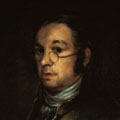
Thus, Venetian painting before it wholly died, flickered up again strong enough to light the torch that is burning so steadily now. Indeed, not the least attraction of the Venetian masters is their note of modernity, by which I mean the feeling they give us that they were on the high road to the art of to-day. We have seen how on two separate occasions Venetian painters gave an impulse to Spaniards, who in turn have had an extraordinary influence on modern painting.

It is scarcely to be wondered at that the Venetian artist in whom we first find the expression of the new feelings, should have been one who by wide travel had been brought in contact with the miseries of Italy in a way not possible for those who remained sheltered in Venice. Lorenzo Lotto, when he is most himself, does not paint the triumph of man over his environment, but in his altar-pieces, and even more in his portraits, he shows us people in want of the consolations of religion, of sober thought, of friendship and affection.

The following essay owes its origin to the author's belief that Venetian painting is the most complete expression in art of the Italian Renaissance. The Renaissance is even more important typically than historically. Historically it may be looked upon as an age of glory or of shame according to the different views entertained of European events during the past five centuries. But typically it stands for youth, and youth alone—for intellectual curiosity and energy grasping at the whole of life as material which it hopes to mould to any shape.

It is as impossible to keep untouched by what happens to your neighbours as to have a bright sky over your own house when it is stormy everywhere else. Spain did not directly dominate Venice, but the new fashions of life and thought inaugurated by her nearly universal triumph could not be kept out. Her victims, among whom the Italian scholars must be reckoned, flocked to Venice for shelter, persecuted by a rule that cherished the Inquisition. Now for the first time Venetian painters were brought in contact with men of letters.

Tintoretto grew to manhood when the fruit of the Renaissance was ripe on every bough. The Renaissance had resulted in the emancipation of the individual, in making him feel that the universe had no other purpose than his happiness. This brought an entirely new answer to the question, "Why should I do this or that?" It used to be, "Because self-instituted authority commands you." The answer now was, "Because it is good for men." In this lies our greatest debt to the Renaissance, that it instituted the welfare of man as the end of all action.

The emancipation of the individual had a direct effect on the painter in freeing him from his guild. It now occurred to him that possibly he might become more proficient and have greater success if he deserted the influences he was under by the accident of birth and residence, and placed himself in the school that seemed best adapted to foster his talents. This led to the unfortunate experiment of Eclecticism which checked the purely organic development of the separate schools.

Egyptian painting is principally found on the walls of temples and tombs, upon columns and cornices, and on small articles found in burial places. There is no doubt that it was used as a decoration; but it was also intended to be useful, and was so employed as to tell the history of the country;—its wars, with their conquests and triumphs, and the lives of the kings, and many other stories, are just as distinctly told by pictures as by the hieroglyphics or Egyptian writings. We can scarcely say that Egyptian painting is beautiful; but it certainly is very interesting.

The remains of Assyrian painting are so few that they scarcely serve any other purpose than to prove that the Assyrians were accustomed to decorate their walls with pictures. Sometimes the walls were prepared with plaster, and the designs were painted on that; in other cases the painting was done upon the brick itself. The paintings on plaster were usually on the inner walls, and many of these which have been discovered during the excavations have disappeared when exposed to the air after their long burial from the sight and knowledge of the world.

In Babylon, in the sixth century b.c., under the reign of Nebuchadnezzar, the art of tile-painting reached a high state of perfection. The Babylonians had no such splendid alabaster as had the Assyrians, neither had they lime-stone; so they could not make fine sculptured slabs, such as are found at Nineveh and in other Assyrian ruins. But the Babylonians had a fine clay, and they learned how to use it to the best advantage.

The painting of Greece and that of ancient Italy are so much the same that it is almost impossible to speak of them separately; the art of painting was carried from Greece to Italy by the Etruscans, and the art of ancient Rome was simply that of Greece transplanted. If Greek artists were employed by Romans, certainly their works were Greek; and if Romans painted they aimed to imitate the Greeks exactly, so that Italian painting before the time of the Christian era must be considered together with that of Greece.

Syndicate content