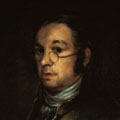
Painting

In Babylon, in the sixth century b.c., under the reign of Nebuchadnezzar, the art of tile-painting reached a high state of perfection. The Babylonians had no such splendid alabaster as had the Assyrians, neither had they lime-stone; so they could not make fine sculptured slabs, such as are found at Nineveh and in other Assyrian ruins. But the Babylonians had a fine clay, and they learned how to use it to the best advantage.

The painting of Greece and that of ancient Italy are so much the same that it is almost impossible to speak of them separately; the art of painting was carried from Greece to Italy by the Etruscans, and the art of ancient Rome was simply that of Greece transplanted. If Greek artists were employed by Romans, certainly their works were Greek; and if Romans painted they aimed to imitate the Greeks exactly, so that Italian painting before the time of the Christian era must be considered together with that of Greece.

The pictures known as mosaics are made by fitting together bits of marble, stone, or glass of different colors and so arranging them as to represent figures and objects of various kinds, so that at a distance they have much the same effect as that of pictures painted with brush and colors. The art of making mosaics is very ancient, and was probably invented in the East, where it was used for borders and other decorations in regular set patterns. It was not until after the time of Alexander the Great that the Greeks used this process for making pictures.

It is well known that much of the decoration of Greek edifices was in colors. Of course these paintings were put upon the marble and stone of which the structures were made. The Greeks also made small pictures and painted them on stone, just as canvas and panels of wood are now used. Such painted slabs have been found in Herculaneum, in Corneto, and in different Etruscan tombs; but the most important and satisfactory one was found at Pompeii in 1872. Since then the colors have almost vanished; but Fig. 14, from it, will show you how it appeared when found.

It should be stated from the outset that there is nothing dogmatic about this explanation of the Impressionist theories, and that it is not the result of a preconceived plan. In art a system is not improvised. A theory is slowly evolved, nearly always unknown to the author, from the discoveries of his sincere instinct, and this theory can only be formulated after years by criticism facing the works. Monet and Manet have worked for a long time without ever thinking that theories would be built upon their paintings.

As I have said, Edouard Manet has not been entirely the originator of the Impressionist technique. It is the work of Claude Monet which presents the most complete example of it, and which also came first as regards date. But it is very difficult to determine such cases of priority, and it is, after all, rather useless. A technique cannot be invented in a day.

I have said how vain it is to class artistic temperaments under a title imposed upon them generally by circumstances and dates, rather than by their own free will. The study of Degas will furnish additional proof for it. Classed with the Impressionists, this master participates in their ideas in the sphere of composition, rather than in that of colour. He belongs to them through his modernity and comprehension of character. Only when we come to his quite recent landscapes (1896), can we link him to Monet and Renoir as colourist, and he has been more their friend than their colleague.

With Claude Monet we enter upon Impressionism in its most significant technical expression, and touch upon the principal points referred to in the second chapter of this book.

The work of Auguste Renoir extends without interruption over a period of forty years. It appears to sum up the ideas and methods of Impressionist art so completely that, should it alone be saved from a general destruction, it would suffice to bear witness to this entire art movement. It has unfolded itself from 1865 to our days with a happy magnificence, and it allows us to distinguish several periods, in the technique at least, since the variety of its subjects is infinite. Like Manet, and like all truly great and powerful painters, M.

Manet, Degas, Monet and Renoir will present themselves as a glorious quartet of masters, in the history of painting. We must now speak of some personalities who have grown up by their side and who, without being great, offer nevertheless a rich and beautiful series of works.

Syndicate content