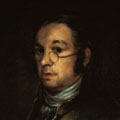
Painting

(GUIDO RENI)

CHARLOTTE A. EATON

On the roof of the summer-house of the Palazzo Rospigliosi, is painted the celebrated fresco of Guido's Aurora. Its colouring is clear, harmonious, airy, brilliant—unfaded by time; and the enthusiastic admirer of Guido's genius may be permitted to hope that this, his noblest work, will be immortal as his fame.

It cannot be said that the Venetian artists of the second half of the sixteenth century equalled in their collective excellence the great masters of the first, but in single instances they are frequently entitled to rank beside them.

In the preface to the Anecdotes of Painting written in 1762, Horace Walpole observes that this country had not a single volume to show on the works of its painters. "In truth," he continues, "it has very rarely given birth to a genius in that profession. Flanders and Holland have sent us the greatest men that we can boast.

One of the sensations of the Exhibition of Spanish Old Masters at the Grafton Gallery in the autumn of 1913 was an altar panel, dated 1250, which was acquired by Mr Roger Fry in Paris, and catalogued as of the "Early Catalan School." In view of the fact that this picture is "certainly to be regarded as one of the very oldest of primitive pictures painted on wood in any country ...

Syndicate content