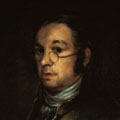
Bernhard Berenson

To distinguish clearly, after the lapse of nearly five centuries, between Uccello and Castagno, and to determine the precise share each had in the formation of the Florentine school, is already a task fraught with difficulties. The scantiness of his remaining works makes it more than difficult, makes it almost impossible, to come to accurate conclusions regarding the character and influence of their somewhat younger contemporary, Domenico Veneziano.

Benozzo was gifted with a rare facility not only of execution but of invention, with a spontaneity, a freshness, a liveliness in telling a story that wake the child in us, and the lover of the fairy tale. Later in life, his more precious gifts deserted him, but who wants to resist the fascination of his early works, painted, as they seem, by a Fra Angelico who had forgotten heaven and become enamoured of the earth and the spring-time? In his Riccardi Palace frescoes, he has sunk already to portraying the Florentine apprentice’s dream of a holiday in the country on St.

First, his successes. Nowhere outside of the best Greek art shall we find, as in Michelangelo’s works, forms whose tactile values so increase our sense of capacity, whose movements are so directly communicated and inspiring.

1470-after 1526. Started under influence of Ghirlandajo and Credi, later became almost Umbrian, and at one time was in close contact with Garbo, whom he may have assisted.

  • Bologna.
    • Pinacoteca, 102. Polyptych: Madonna and Saints.
  • Florence.
    • S. Felice. Painted Crucifix.
  • Munich.
    • 981. Crucifixion (?).
  • Paris.
    • 1512. St. Francis receiving Stigmata.
  • Rome.
    • St.

Let us now turn back to Giotto and see in what way he fulfils the first condition of painting as an art, which condition, as we agreed, is somehow to stimulate our tactile imagination. We shall understand this without difficulty if we cover with the same glance two pictures of nearly the same subject that hang side by side in the Florence Academy, one by “Cimabue,” and the other by Giotto. The difference is striking, but it does not consist so much in a difference of pattern and types, as of realisation.

1462-1521. Pupil of Cosimo Rosselli; influenced by Verrocchio, Signorelli, Filippino, Leonardo, and Credi.

No such difficulties as we have encountered in the study of Uccello, Castagno, and Veneziano meet us as we turn to Fra Filippo. His works are still copious, and many of them are admirably preserved; we therefore have every facility for judging him as an artist, yet nothing is harder than to appreciate him at his due. If attractiveness, and attractiveness of the best kind, sufficed to make a great artist, then Filippo would be one of the greatest, greater perhaps than any other Florentine before Leonardo.

Ghirlandaio was born to far more science and cunning in painting than was current in Benozzo’s early years, and all that industry, all that love of his occupation, all that talent even, can do for a man, they did for him; but unfortunately he had not a spark of genius.

Syndicate content