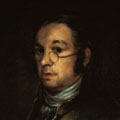
Bernhard Berenson

1401-1428. Pupil of Masolino; influenced by Brunellesco and Donatello.

Giotto born again, starting where death had cut short his advance, instantly making his own all that had been gained during his absence, and profiting by the new conditions, the new demands—imagine such an avatar, and you will understand Masaccio.

Giotto we know already, but what were the new conditions, the new demands? The mediæval skies had been torn asunder and a new heaven and a new earth had appeared, which the abler spirits were already inhabiting and enjoying. Here new interests and new values prevailed.

1441 or 2-1493. Pupil of Fra Filippo; influenced slightly by Castagno’s works; imitated most of his Florentine contemporaries, especially Botticelli, Ghirlandajo, and Amico di Sandro.

Let us look now at an even greater triumph of movement than the Nudes, Pollaiuolo’s “Hercules Strangling Antæus.” As you realise the suction of Hercules’ grip on the earth, the swelling of his calves with the pressure that falls on them, the violent throwing back of his chest, the stifling force of his embrace; as you realise the supreme effort of Antæus, with one hand crushing down upon the head and the other tearing at the arm of Hercules, you feel as if a fountain of energy had sprung up under your feet and were playing through your veins.

Andrea del Sarto approached perhaps as closely to a Giorgione or a Titian as could a Florentine, ill at ease in the neighbourhood of Leonardo and Michelangelo. As an artist he was, it is true, not endowed with the profoundest sense for the significant, yet within the sphere of common humanity who has produced anything more genial than his “Portrait of a Lady”—probably his wife—with a Petrarch in her hands?

1425-1499. Pupil of Domenico Veneziano; influenced by Paolo Uccello.

1449-1494. Pupil of Baldovinetti; influenced slightly by Botticelli and more strongly by Verrocchio.

Masaccio’s death left Florentine painting in the hands of three men older, and two somewhat younger than himself, all men of great talent, if not of genius, each of whom—the former to the extent habits already formed would permit, the latter overwhelmingly, felt his influence. The older, who, but for Masaccio, would themselves have been the sole determining personalities in their art, were Fra Angelico, Paolo Uccello, and Andrea del Castagno; the younger, Domenico Veneziano and Fra Filippo.

Syndicate content