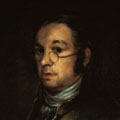
Bernhard Berenson

Bronzino, Pontormo’s close follower, had none of his master’s talent as a decorator, but happily much of his power as a portrait-painter. Would he had never attempted anything else!

1420-1497. Pupil possibly of Giuliano Pesello, and of the Bicci; assistant and follower of Fra Angelico.

1276-1336. Follower of Pietro Cavallini; influenced by Giovanni Pisano.

The immense superiority of the artist even to his greatest achievement in any one art form, means that his personality was but slightly determined by the particular art in question, that he tended to mould it rather than let it shape him. It would be absurd, therefore, to treat the Florentine painter as a mere link between two points in a necessary evolution. The history of the art of Florence never can be, as that of Venice, the study of a placid development.

  • Berlin.
    • Small Marble Apollo.
  • Bologna.
    • S. Domenico. S. Petronio; An Angel (for Ark of St. Dominic). 1494.
  • Bruges.
    • Notre Dame. Madonna.

The essential in painting, especially in figure-painting, is, we agreed, the rendering of the tactile values of the forms represented, because by this means, and this alone, can the art make us realise forms better than we do in life. The great painter, then, is, above all, an artist with a great sense of tactile values and great skill in rendering them. Now this sense, though it will increase as the man is revealed to himself, is something which the great painter possesses at the start, so that he is scarcely, if at all, aware of possessing it.

1435-1488. Pupil of Donatello and Alesso Baldovinetti, influenced by Pesellino.

Verrocchio was, among Florentines at least, the first to feel that a faithful reproduction of the contours is not landscape, that the painting of nature is an art distinct from the painting of the figure. He scarcely knew where the difference lay, but felt that light and atmosphere play an entirely different part in each, and that in landscape these have at least as much importance as tactile values.

1444-1510. Pupil of Fra Filippo; influenced early by the Pollajuoli.

Syndicate content