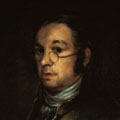
Bernhard Berenson

  • Bologna.
    • Pinacoteca, 102. Polyptych: Madonna and Saints.
  • Florence.
    • S. Felice. Painted Crucifix.
  • Munich.
    • 981. Crucifixion (?).
  • Paris.
    • 1512. St. Francis receiving Stigmata.
  • Rome.
    • St.

Let us now turn back to Giotto and see in what way he fulfils the first condition of painting as an art, which condition, as we agreed, is somehow to stimulate our tactile imagination. We shall understand this without difficulty if we cover with the same glance two pictures of nearly the same subject that hang side by side in the Florence Academy, one by “Cimabue,” and the other by Giotto. The difference is striking, but it does not consist so much in a difference of pattern and types, as of realisation.

1462-1521. Pupil of Cosimo Rosselli; influenced by Verrocchio, Signorelli, Filippino, Leonardo, and Credi.

No such difficulties as we have encountered in the study of Uccello, Castagno, and Veneziano meet us as we turn to Fra Filippo. His works are still copious, and many of them are admirably preserved; we therefore have every facility for judging him as an artist, yet nothing is harder than to appreciate him at his due. If attractiveness, and attractiveness of the best kind, sufficed to make a great artist, then Filippo would be one of the greatest, greater perhaps than any other Florentine before Leonardo.

But unfortunately, though born and nurtured in a world where his feeling for the nude and his ideal of humanity could be appreciated, he passed most of his life in the midst of tragic disasters, and while yet in the fulness of his vigour, in the midst of his most creative years, he found himself alone, perhaps the greatest, but alas! also the last of the giants born so plentifully during the fifteenth century. He lived on in a world he could not but despise, in a world which really could no more employ him than it could understand him.

Died rather young in 1457. Influenced by Donatello and Paolo Uccello.

The rendering of tactile values once recognised as the most important specifically artistic quality of Giotto’s work, and as his personal contribution to the art of painting, we are all the better fitted to appreciate his more obvious though less peculiar merits—merits, I must add, which would seem far less extraordinary if it were not for the high plane of reality on which Giotto keeps us. Now what is back of this power of raising us to a higher plane of reality but a genius for grasping and communicating real significance?

Known to have been active during the last three decades of the fifteenth century. Pupil possibly of Fra Angelico or Benozzo Gozzoli; influenced by Neri di Bicci; eclectic imitator of Alesso Baldovinetti, Fra Filippo, and Pesellino. Some of the best of the following are copies of the two last and of Compagno di Pesellino.

Syndicate content