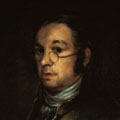
Bernhard Berenson

Well, it was of the power to stimulate the tactile consciousness—of the essential, as I have ventured to call it, in the art of painting—that Giotto was supreme master. This is his everlasting claim to greatness, and it is this which will make him a source of highest æsthetic delight for a period at least as long as decipherable traces of his handiwork remain on mouldering panel or crumbling wall.

  • Berlin.
    • Von Kaufmann Collection. Head of female Saint.
  • Florence.
    • Bargello. 139. Angel playing Viol.
    • Or San Michele. Tabernacle. Finished 1359.

Benozzo was gifted with a rare facility not only of execution but of invention, with a spontaneity, a freshness, a liveliness in telling a story that wake the child in us, and the lover of the fairy tale. Later in life, his more precious gifts deserted him, but who wants to resist the fascination of his early works, painted, as they seem, by a Fra Angelico who had forgotten heaven and become enamoured of the earth and the spring-time? In his Riccardi Palace frescoes, he has sunk already to portraying the Florentine apprentice’s dream of a holiday in the country on St.

Values of touch and movement, we remember, are the specifically artistic qualities in figure painting (at least, as practised by the Florentines), for it is through them chiefly that painting directly heightens life.

1475-1554. Pupil of Ghirlandajo and Pier di Cosimo; assistant of Albertinelli; influenced by Perugino, Michelangelo, Francesco Francia, and Franciabigio.

  • Assisi.
    • S. Francesco, Lower Church, R. Transept. Frescoes: Eight Scenes from the Childhood of Christ.
  • Berlin.
    • 1074a. Crucifixion.
  • Florence.
    • Bargello Chapel. Fresco: Paradise (?). (Cf. also under B for assistance rendered by C.)

At the risk of seeming to wander off into the boundless domain of æsthetics, we must stop at this point for a moment to make sure that we are of one mind regarding the meaning of the phrase “artistic pleasure,” in so far at least as it is used in connection with painting.

What is the point at which ordinary pleasures pass over into the specific pleasures derived from each one of the arts? Our judgment about the merits of any given work of art depends to a large extent upon our answer to this question.

1422-1457. Pupil possibly of his grandfather, Giuliano Pesello; follower of Fra Angelico, Masaccio and Domenico Veneziano, but chiefly of Fra Filippo Lippi.

Syndicate content